

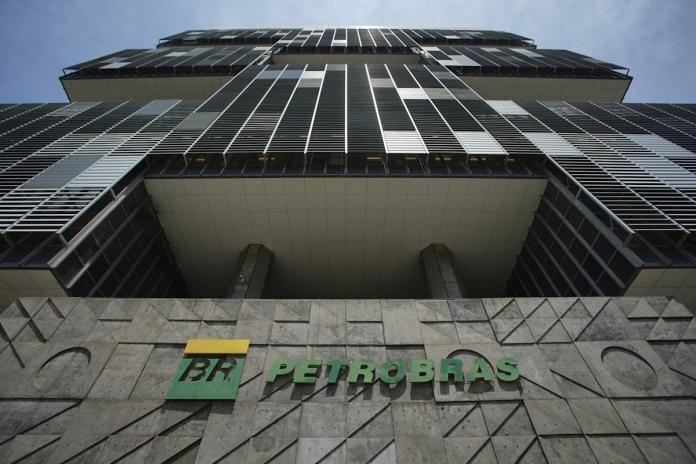
The Brazilian economic landscape experienced substantial shifts, following an unexpected reduction in the dividend payout from the national oil behemoth, Petroleo Brasileiro SA, commonly known as Petrobras. This significant decrease has ignited anxieties over potential augmentation of government encroachment within the country’s largest corporations leading to palpable market volatility.
The news led to an immediate depreciation of the Brazilian currency. The real demonstrated pliability, conceding a fall of 1.1% on Friday, thus earning the undesirable distinction of being the leading loser among the world’s major currencies. Additionally, long-term swap rates observed a conspicuous increase. The country’s flagship Ibovespa stock market index was subsequently pulled down to its lowest value in over three weeks, largely due to Petrobras, a significant constituent with a 13% weighting in the index. The company’s shares nosedived by over 10%, thereby wiping off nearly 56 billion reais, equating to $11 billion, from its market capitalization.
The reduced disbursement has heightened consternation that Brazil’s incumbent left-leaning government is attempting to exert enhanced control over the industrial sector to help realize its political ambitions. In normative responses, leading financial institutions such as Bank of America Corporation and Banco Santander SA reacted by swiftly rescinding their buy-equivalent recommendations for Petrobras. The oil titan’s chief executive officer’s recent announcements, signaling prudence concerning shareholder returns, have fueled these speculations. The company is diverting its focus towards becoming a pioneer in renewable energy, assiduously aligning with the policy objectives of Brazilian President Luiz Inacio Lula da Silva.
Malcolm Dorson, Senior Portfolio Manager and Head of Emerging Market Strategy at Global X Management Company in New York, provided a succinct summary of the situation: “The indicators are deteriorating. Brazil boasts a plethora of opportunities, but its equity yardstick is built on Petrobras and Vale, both fraught with unpredictable political risks.”
Highlighting the extent of the unexpected negative market fallout, the company’s board sanctioned dividend payouts of 1.10 reais per share or a total of 14.2 billion reais for the fourth quarter. This figure conspicuously undercuts the average of four estimates scrutinized by Bloomberg. Furthermore, the company refrained from disbursing any additional extraordinary dividends.
The unsavory dividend revelation comes as a significant blow to Brazilian investors. This development transpires after a sustained period of modest political turbulence domestically, during which the Brazilian real was touted as a propitious foothold for carry traders.
Adding another layer of uncertainty, investors attentively track the ongoing CEO succession drama at mining powerhouse Vale SA. Potential government endorsed candidacies possessing strong governmental ties could give hints about President Lula’s administration’s credibility regarding corporate influence.
The landscape is continuously evolving with information from Raphael Almeida Dos Santos and Jeremy R. Cooke contributing to the situation. Further updates will follow as the market concludes.
Lastly, it’s worth acknowledging that an advanced understanding of these complex and nuanced economic and political interplays is crucial for global investors, providing them with detailed insights into the inner workings of the world’s fifth-largest country by population, Brazil. The influence of politics over financial markets remains a tricky terrain to navigate, attesting to the intricate relationship between these two distinctly diverse landscapes.
Vocabulary List:
- Substantial (adjective): Of considerable importancesizeor worth.
- Dividend (noun): A sum of money paid regularly by a company to its shareholders out of its profits.
- Augmentation (noun): The action or process of making something greater by adding to it.
- Encroachment (noun): Intrusion on a person territoryrightsetc.
- Palpable (adjective): Able to be touched or felt.
- Volatility (noun): The quality or state of being likely to change suddenly.



