

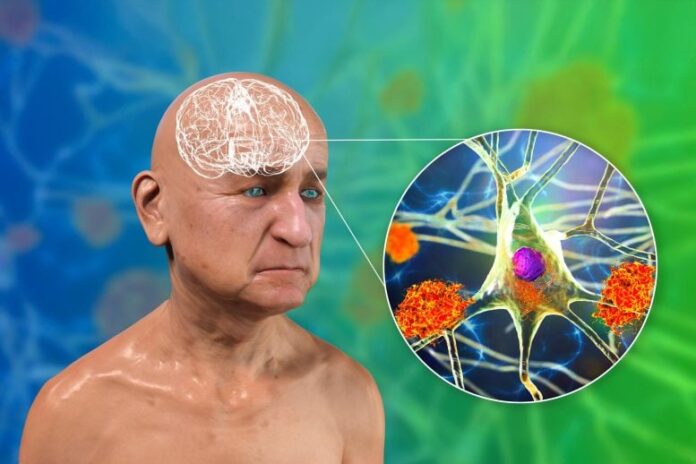
A recent study suggests a closer connection between two important proteins related to Alzheimer’s disease, offering new insights into the condition. Alzheimer’s is the leading cause of dementia, but researchers remain uncertain about what initiates the brain damage. Historically, the focus has been on amyloid beta, which accumulates into plaques, and tau, which forms tangles within neurons.
The study indicates that amyloid beta and tau may be involved in the same underlying problem, potentially linked to a vital support system within the cells. Neurons have structures called microtubules that help maintain their shape and assist in transporting essential materials. Normally, tau supports microtubules, but the study suggests amyloid beta might disrupt this function by competing for binding sites on the microtubules.
Researchers tested this theory using fluorescence techniques to see how amyloid beta interacts with both individual proteins and intact microtubules. Their findings revealed that amyloid beta binds to microtubules similarly to tau, which could explain their shared pathways. Further competition experiments showed that when tau was introduced, amyloid beta binding decreased but did not entirely stop, indicating they may compete for similar sites.
This research offers an explanation for why amyloid plaques do not consistently align with the severity of symptoms seen in Alzheimer’s patients. It suggests that early detrimental events might occur before large plaques even form. The study proposes a “microtubule nexus hypothesis,” aiming to reconcile conflicting theories in Alzheimer’s research and to inspire new treatment approaches that focus on the interaction between amyloid beta and tau.
Test Your Understanding
How much do you know?