Warning: foreach() argument must be of type array|object, false given in /home/u750883576/domains/esl-news.com/public_html/wp-content/plugins/gpt-post-quiz/includes/admin/class-gpoq-admin-4.php on line 450
Warning: foreach() argument must be of type array|object, false given in /home/u750883576/domains/esl-news.com/public_html/wp-content/plugins/td-composer/legacy/common/wp_booster/td_menu.php on line 88
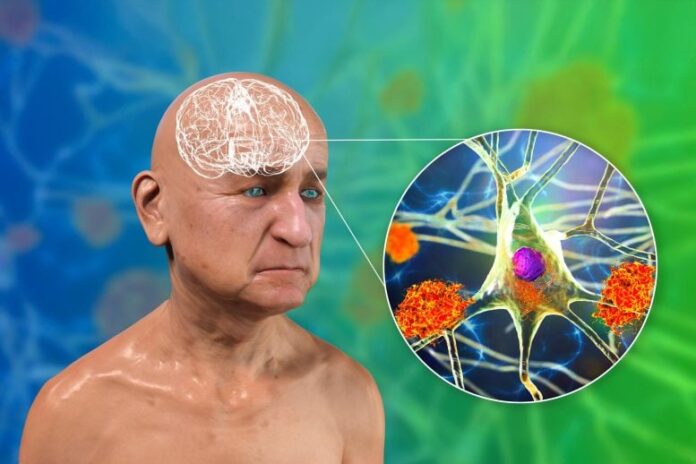
A new study shows that two well-known proteins in Alzheimer’s disease may be more closely linked than previously thought. Alzheimer’s disease is the most common cause of dementia, but scientists still do not fully understand what causes damage in the brain.
For many years, researchers have focused on two main proteins: amyloid beta, which creates plaques, and tau, which can form tangles inside brain cells called neurons. The new study suggests both proteins might share a key problem involving microtubules, which are tiny structures that help support neurons.
In healthy cells, tau helps these microtubules function properly. However, the study finds that amyloid beta can interfere with tau’s function by competing for the same binding sites on microtubules. Experiments showed that when tau is present, amyloid beta binding decreases, suggesting that the two proteins target the same areas.
This finding could explain why amyloid plaques do not always match the severity of Alzheimer’s symptoms. It also offers new ideas for treatments that could stop amyloid beta from displacing tau on microtubules, potentially helping to protect brain health. The study provides a clearer view of the relationship between amyloid beta and tau in Alzheimer’s disease.
What are the two main proteins focused on in Alzheimer's research?
Amyloid beta and tau
Tau and synuclein
Amyloid beta and prion
Synuclein and prion
What do microtubules help support?
Brain cells
Heart cells
Muscle cells
Skin cells
What problem do amyloid beta and tau share according to the study?
Creating plaques
Interfering with microtubules
Displacing neurons
Causing tangles
What does tau help microtubules do in healthy cells?
Form plaques
Function properly
Create tangles
Displace amyloid beta
What could potentially help protect brain health according to the study?
Stopping amyloid beta from forming plaques
Inhibiting tau function
Preventing amyloid beta from displacing tau
Enhancing microtubule function
Amyloid beta creates tangles in brain cells.
The study indicates that amyloid beta can compete with tau for the same binding sites.
Researchers fully understand the causes of damage in Alzheimer's disease.
Microtubules are large structures that do not support neurons.
Tau displacement by amyloid beta could lead to cognitive impairment.
Amyloid plaques always match the severity of Alzheimer's symptoms.
Alzheimer’s disease is the most common cause of dementia, but scientists do not fully understand what causes damage in the brain, particularly the role of .
The two main proteins focused on in the study are amyloid beta and .
In healthy cells, tau helps microtubules function properly, but amyloid beta can interfere with tau’s function by competing for the same binding sites on .
The study shows that when tau is present, amyloid beta binding decreases, suggesting that the two proteins target the same .
The new study offers ideas for treatments that could stop amyloid beta from displacing tau on .
This finding could explain why amyloid plaques do not always match the severity of Alzheimer's .
What are the two main proteins focused on in Alzheimer's research?
Amyloid beta and tau
Tau and synuclein
Amyloid beta and prion
Synuclein and prion
What do microtubules help support?
Brain cells
Heart cells
Muscle cells
Skin cells
What problem do amyloid beta and tau share according to the study?
Creating plaques
Interfering with microtubules
Displacing neurons
Causing tangles
What does tau help microtubules do in healthy cells?
Form plaques
Function properly
Create tangles
Displace amyloid beta
What could potentially help protect brain health according to the study?
Stopping amyloid beta from forming plaques
Inhibiting tau function
Preventing amyloid beta from displacing tau
Enhancing microtubule function
Amyloid beta creates tangles in brain cells.
The study indicates that amyloid beta can compete with tau for the same binding sites.
Researchers fully understand the causes of damage in Alzheimer's disease.
Microtubules are large structures that do not support neurons.
Tau displacement by amyloid beta could lead to cognitive impairment.
Amyloid plaques always match the severity of Alzheimer's symptoms.
Alzheimer’s disease is the most common cause of dementia, but scientists do not fully understand what causes damage in the brain, particularly the role of .
The two main proteins focused on in the study are amyloid beta and .
In healthy cells, tau helps microtubules function properly, but amyloid beta can interfere with tau’s function by competing for the same binding sites on .
The study shows that when tau is present, amyloid beta binding decreases, suggesting that the two proteins target the same .
The new study offers ideas for treatments that could stop amyloid beta from displacing tau on .
This finding could explain why amyloid plaques do not always match the severity of Alzheimer's .