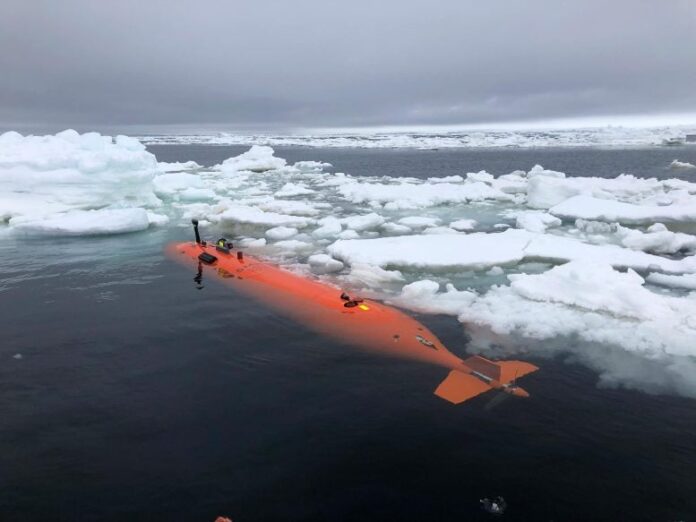
A robotic submarine named Ran, which explored under Antarctica’s glaciers, has been lost, but its findings are changing how scientists understand ice melt. A new submarine, Ran II, is in development to continue its work in this challenging area of Earth science.
Ran was an autonomous underwater vehicle run by the University of Gothenburg. It disappeared in January 2024 during an important mission. With help from a donation by the Voice of the Ocean Foundation and insurance funds, the more advanced Ran II will be delivered in the winter of 2026/2027.
Over six years, Ran revealed data from places unreachable by humans or ships. It provided vital images of the Thwaites Glacier and showed how ice melts. Anna Wåhlin, a professor of oceanography, stated that Ran allowed researchers to see the glacier’s underside.
Ran’s most impressive journey was under the Dotson Ice Shelf, where it travelled over 1,000 kilometres in darkness and mapped the ice’s base. Its discoveries showed a complex landscape, challenging previous views of a smooth ice base. This information is crucial because thinning ice shelves can speed up glaciers, affecting global sea levels.
Despite its risks, including being out of contact for over 24 hours, Ran completed over 40 successful missions before its disappearance. Ran II aims to improve on these methods, enhancing navigation and decision-making during missions, and continuing to explore the unknown regions beneath the ice.
Test Your Understanding
How much do you know?