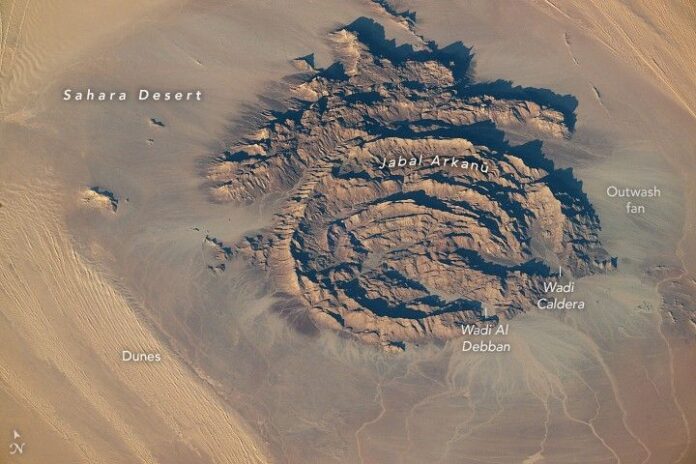
Scientists from NASA’s Earth Observatory have revealed new findings about Mount Arkanu, a massive geological formation in the Sahara Desert, which has long puzzled researchers. Initially believed to be created by an ancient asteroid impact, recent studies indicate that the mountain is the result of volcanic activity over millions of years.
Mount Arkanu, located in Libya, measures approximately 15 miles across and features concentric rocky rings made of basalt and granite. The research shows that magma repeatedly intruded from below, creating these unique formations. According to scientists, these events produced overlapping rings, with their centres oriented towards the southwest. The area is also home to a distinctive “hat-shaped” structure composed of sandstone, limestone, and quartz, which further enhances the geological interest of Mount Arkanu.
In addition to its striking geology, Mount Arkanu is notable for its ancient petroglyphs, which depict animals and human figures. Discovered in 2003, these carvings suggest that the area has been significant for human activity for thousands of years, serving as a seasonal grazing ground for cattle.
Interestingly, Mount Arkanu receives slightly more rainfall than the surrounding Sahara, thanks to orographic precipitation, where moist air is lifted over mountains. This surplus supports various vegetation, creating an oasis that benefits local wildlife and herders.
The unique landscape of Mount Arkanu has historically provided shelter and resources to nomadic tribes, especially the Bedouins, who have used the site for grazing and protection from the desert’s harsh conditions. This deep connection between the land’s geology and local cultures continues to be significant today.
Test Your Understanding
How much do you know?