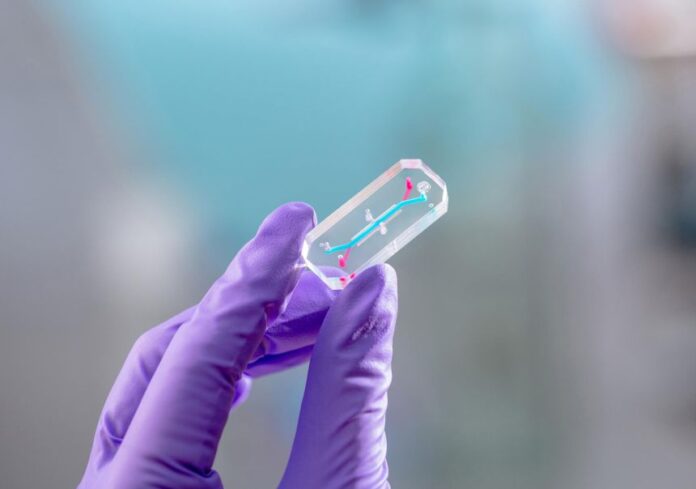
Before the Artemis II astronauts boarded their Orion capsule for a lunar mission, a small part of each astronaut was already on board. Inside the spacecraft, four USB-sized “avatars” accompanied the crew on this historic journey. Their mission, however, is only beginning.
These avatars, known as organ chips, contain bone marrow tissue from the astronauts: NASA’s Reid Wiseman, Victor Glover, Christina Koch, and Canadian astronaut Jeremy Hansen. Researchers believe this experiment could provide crucial insights into how space affects human health.
The study, called AVATAR (A Virtual Astronaut Tissue Analog Response), enables scientists to simulate organ responses in deep space. According to Lisa Carnell, Director of NASA’s Biological and Physical Sciences Division, this approach allows for a detailed understanding of body changes, unlike traditional medical tests conducted after flights.
By focusing on bone marrow, researchers aim to gather data about immune responses to radiation and the challenges of deep space travel. These findings could lead to personalised treatments, making long missions safer for astronauts.
Before the mission, Carnell noted the potential for different responses to radiation among astronauts. This insight could help create tailored medical supplies for extended missions to Mars or other destinations.
Ultimately, the goal is to send avatars of astronauts ahead of deep-space missions to identify potential health risks. As the current mission progresses, the astronauts will also gather vital data on the effects of space on the human body, contributing to advancements in human spaceflight.
Test Your Understanding
How much do you know?