

Wednesday, June 24, 2026

NASA Considered ISS Evacuation Amid Russia’s Hull Repair Plans

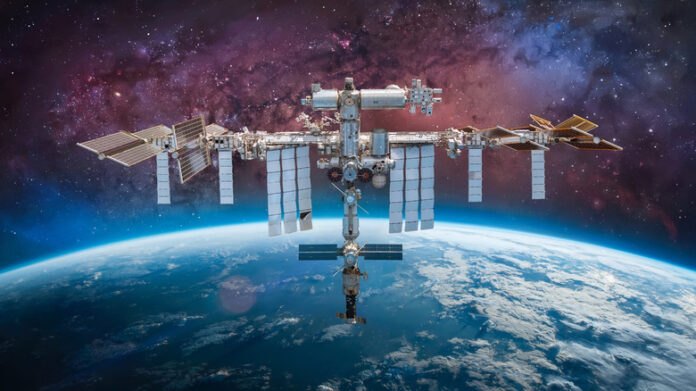
On June 5, NASA instructed its Crew-12 astronauts to prepare for an evacuation from the International Space Station (ISS) due to a longstanding air leak on the Russian side. After several tense hours, NASA declared the situation safe. The incident revealed that the issue stemmed not merely from the leak, but from Russian cosmonauts attempting to fix it using a drill and a saw in space.

Reports indicate that earlier in the year, Russian engineers had used sealant to address the leaks. These leaks, located in the PrK transfer tunnel connected to the Zvezda module, had allowed air to escape for years, losing between 2 to 4 pounds daily. In severe cases, the leaks could have caused an explosion that would threaten the entire station. Fortunately, the sealant had put a temporary stop to the problem.

However, new leaks reappeared in May. On June 4, the Russian space agency, Roscosmos, communicated to NASA their intention to drill into the station’s hull to tackle the leaks.

NASA did not support this approach. After urging Roscosmos to reconsider, they warned that an evacuation alarm would be triggered if the drilling proceeded. This ultimatum caused the cosmonauts to stand down, although they soon returned with a saw, intending to cut through a structural bracket. This prompted NASA to order an evacuation into the Dragon capsule.

As a result of this international incident, Russia has chosen to decommission the PrK tunnel. It will no longer be pressurized, thus eliminating the risk of explosion. The future of the ISS remains uncertain, with plans to extend its operation, but concerns linger about the safety of further repairs.

Test Your Understanding

Start Quiz

Vocabulary List:
6 words · tap to reveal
ON

Accent

evacuation/ɪˌvækjuˈeɪʃən/noun
moving people away from danger to safety

sealant/ˈsiːlənt/noun
material used to close gaps and stop leaks

ultimatum/ˌʌltɪˈmeɪtəm/noun
a final demand with a threat if refused

decommission/ˌdiːkəˈmɪʃən/verb
officially stop using or operating something

hull/hʌl/noun
the outer shell or body of a ship

pressurized/ˈprɛʃərˌaɪzd/adjective
filled with air or gas at high pressure

How much do you know?

What prompted NASA to declare the situation safe on June 5?
Successful repairs to the leak
Evacuation preparation being completed
Return of the astronauts to Earth
Resolution of communication with Roscosmos
Which part of the ISS was involved in the leaks?
The Zvezda module
The PrK transfer tunnel
The Dragon capsule
The Harmony module
What did Russian engineers use earlier in the year to address the leaks?
Plugs
Sealant
Welding
Tape
When did new leaks reappear?
April 4
May
June 1
March
What did NASA warn would happen if drilling proceeded?
They would cut communication
An evacuation alarm would be triggered
The ISS would lose power
The astronauts would be abandoned
What action did Russia decide to take as a result of the leaks?
Increase the number of astronauts
Decommission the PrK tunnel
Repair the Zvezda module
Enhance communication with NASA
NASA supported the approach of drilling into the ISS hull.
The leaks allowed air to escape at a rate of 2 to 4 pounds daily.
The Russian space agency is called NASA.
The situation in the ISS was resolved without an evacuation.
The temporary stop to the leaks was due to the actions of NASA.
The future of the ISS is uncertain regarding further repairs.
NASA instructed its Crew-12 astronauts to prepare for an evacuation from the ISS due to a longstanding air leak on the Russian side and the gap .
Russian engineers used sealant to address the leaks in the gap .
The leaks had allowed air to escape for years, losing between 2 to 4 pounds daily.
The cosmonauts used a to cut through a structural bracket.
As a result of the leaks, Russia decided to the PrK tunnel.
Concerns about the safety of further repairs linger as the future of the ISS remains .
This question is required

Test Your Understanding

Start Quiz
Vocabulary List:
6 words · tap to reveal
ON
Accent
evacuation/ɪˌvækjuˈeɪʃən/noun
moving people away from danger to safety
sealant/ˈsiːlənt/noun
material used to close gaps and stop leaks
ultimatum/ˌʌltɪˈmeɪtəm/noun
a final demand with a threat if refused
decommission/ˌdiːkəˈmɪʃən/verb
officially stop using or operating something
hull/hʌl/noun
the outer shell or body of a ship
pressurized/ˈprɛʃərˌaɪzd/adjective
filled with air or gas at high pressure

How much do you know?

What prompted NASA to declare the situation safe on June 5?
Successful repairs to the leak
Evacuation preparation being completed
Return of the astronauts to Earth
Resolution of communication with Roscosmos
Which part of the ISS was involved in the leaks?
The Zvezda module
The PrK transfer tunnel
The Dragon capsule
The Harmony module
What did Russian engineers use earlier in the year to address the leaks?
Plugs
Sealant
Welding
Tape
When did new leaks reappear?
April 4
May
June 1
March
What did NASA warn would happen if drilling proceeded?
They would cut communication
An evacuation alarm would be triggered
The ISS would lose power
The astronauts would be abandoned
What action did Russia decide to take as a result of the leaks?
Increase the number of astronauts
Decommission the PrK tunnel
Repair the Zvezda module
Enhance communication with NASA
NASA supported the approach of drilling into the ISS hull.
The leaks allowed air to escape at a rate of 2 to 4 pounds daily.
The Russian space agency is called NASA.
The situation in the ISS was resolved without an evacuation.
The temporary stop to the leaks was due to the actions of NASA.
The future of the ISS is uncertain regarding further repairs.
NASA instructed its Crew-12 astronauts to prepare for an evacuation from the ISS due to a longstanding air leak on the Russian side and the gap .
Russian engineers used sealant to address the leaks in the gap .
The leaks had allowed air to escape for years, losing between 2 to 4 pounds daily.
The cosmonauts used a to cut through a structural bracket.
As a result of the leaks, Russia decided to the PrK tunnel.
Concerns about the safety of further repairs linger as the future of the ISS remains .
This question is required

Read More


