Warning: foreach() argument must be of type array|object, false given in /home/u750883576/domains/esl-news.com/public_html/wp-content/plugins/gpt-post-quiz/includes/admin/class-gpoq-admin-4.php on line 450
Warning: foreach() argument must be of type array|object, false given in /home/u750883576/domains/esl-news.com/public_html/wp-content/plugins/td-composer/legacy/common/wp_booster/td_menu.php on line 88
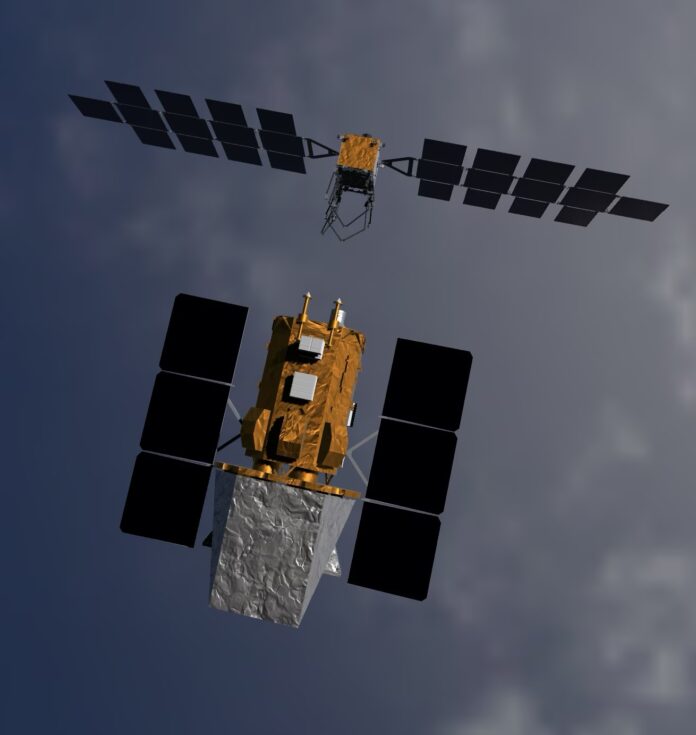
The Swift spacecraft is expected to crash back to Earth, likely before the year ends, unless it receives a boost in altitude. Katalyst Space Technologies plans to use its robotic servicing spacecraft, named Link, to dock with Swift and extend its operational life.
This mission involves several challenges. Swift was not originally designed for docking or altitude boosts. Additionally, this will be Katalyst’s first attempt to connect with another satellite. NASA has set a tight deadline of nine months for Katalyst to build, test, and launch the mission before Swift descends too low for a safe intervention.
Ghonhee Lee, founder and CEO of Katalyst, described the mission as technically ambitious. The spacecraft is scheduled for launch on June 1, but there is little room for mistakes. By late summer or early autumn, Swift’s altitude could drop below 200 miles (320 kilometres), jeopardising the mission.
NASA aims to achieve two objectives: to showcase important technology for future space missions and to save the Swift spacecraft from an uncontrolled re-entry, allowing it to continue its scientific work. Lee noted that achieving a 100% success rate is unlikely.
During a recent visit to Katalyst, technicians were diligently soldering parts and assembling solar panels. A company official commented that while the project is not as advanced as typical government missions, significant progress has been made in just five months.