Warning: foreach() argument must be of type array|object, false given in /home/u750883576/domains/esl-news.com/public_html/wp-content/plugins/gpt-post-quiz/includes/admin/class-gpoq-admin-4.php on line 450
Warning: foreach() argument must be of type array|object, false given in /home/u750883576/domains/esl-news.com/public_html/wp-content/plugins/td-composer/legacy/common/wp_booster/td_menu.php on line 88
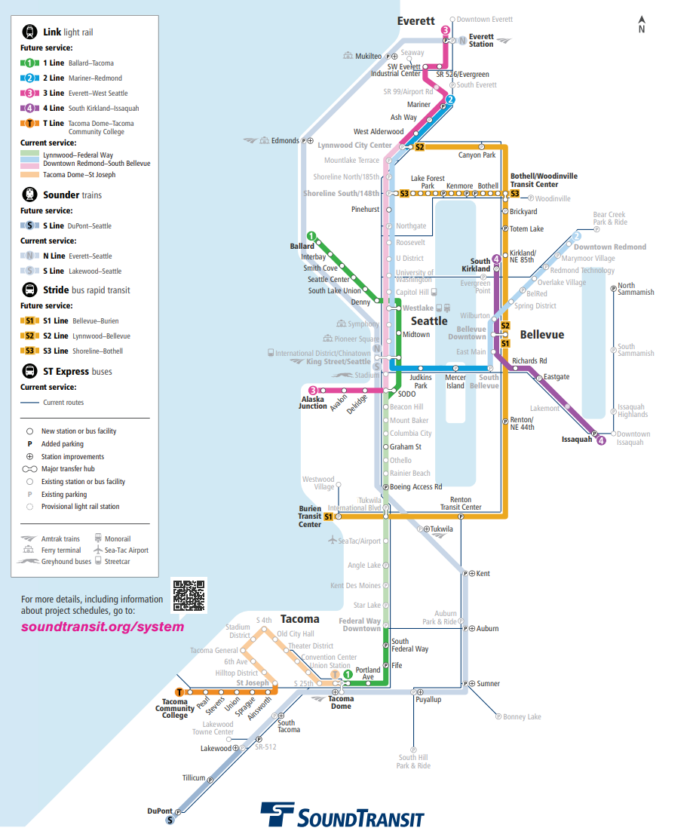
The Sound Transit board met in Tacoma to discuss three possible plans to address a funding shortfall of $34.5 billion by 2046. All options fall short of providing light rail to 15th and Market Street in Ballard, where voters expected a connection in 2016. The board aims to adopt a new plan in May, but this schedule may change.
CEO Dow Constantine introduced the proposals as starting points for discussion. Key decisions include whether to delay the West Seattle Link Extension, which has federal support, or to postpone another line planned from South Kirkland to Issaquah, which has not begun planning.
The three scenarios all propose limiting Ballard Link to either Seattle Center or Smith Cove. Ballard Link is projected to cost over $17 billion, making it the most expensive of the new light rail projects. It is also expected to have the highest ridership, with between 90,000 and 147,000 daily users by 2046.
Seattle Councilmember Dan Strauss urged the board to include a route to Market Street, citing its importance for future ridership. He noted that Ballard had significant support for ST3 at the time of voting. King County Councilmember Claudia Balducci expressed concerns about past delays and the need for more reliable transit solutions. The board will continue to explore these options in the coming weeks.
Test Your Understanding
Start Quiz
Vocabulary List:
6 words · tap to reveal
ON
Accent
shortfall/ˈʃɔrtˌfɔl/noun
money that is not enough for a need
proposals/prəˈpoʊzəlz/noun
plans or ideas offered for people to consider
postpone/poʊstˈpoʊn/verb
to decide to do something at a later time
projected/prəˈdʒɛktɪd/adjective
expected in the future based on information
ridership/ˈraɪdərˌʃɪp/noun
the number of people who use a transport system
scenarios/səˈnɛrioʊz/noun
different possible plans or situations for the future