

Thursday, April 23, 2026

Scientists Uncover First 1-Centimetre Fossil in Gobi Desert

A small fossil found in Mongolia’s Gobi Desert has unveiled a new species of early mammal, believed to have existed approximately 90 million years ago. This discovery is significant as it enhances understanding of the earliest relatives of placental mammals.

The specimen was extracted in 2019 from the Bayanshiree Formation, a site known for its scarcity of mammalian fossils compared to other locations in the region. Its rarity makes this find particularly noteworthy, occurring in a field largely dominated by more extensively documented fossil layers.

Called Ravjaa ishiii, this species is classified within the Zhelestidae family, an early group of eutherian mammals, which are ancestors to modern placental mammals. These small, mouse-sized creatures coexisted with dinosaurs and occupied ecological spaces that researchers are still working to comprehend.

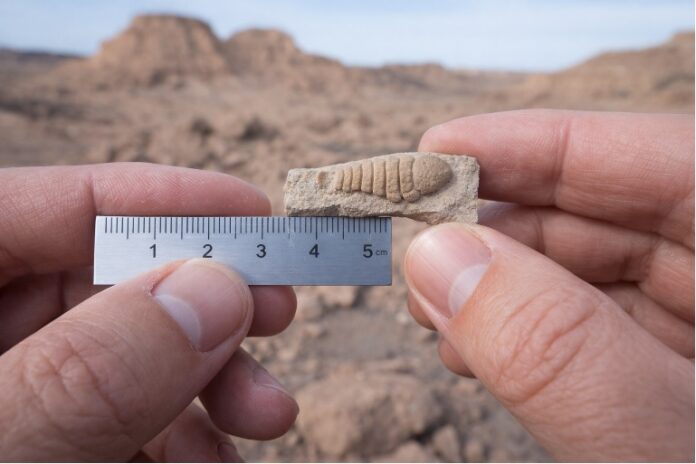
The fossil itself comprises a mere 1-centimetre jaw fragment, including the tip of a premolar and three molars. Despite its size, this fragment contains enough anatomical detail to classify it as a new genus and species. Researchers, including Tsukasa Okoshi, highlighted that the well-preserved fossils from this era in Mongolia have been crucial to understanding mammalian evolution during the Mesozoic era.

Notably, the dental features of Ravjaa ishiii are distinctive; its molars are unusually tall and robust, setting it apart from known relatives. This suggests that early eutherians began to exploit resources linked to the rise of flowering plants during the Cretaceous period, indicating a shift in dietary habits even as dinosaurs maintained ecological dominance.

Beyond its anatomy, Ravjaa ishiii holds evolutionary significance as the first identified zhelestid specimen from the Bayanshiree Formation, representing a potential ancestral link that may date back to the transition between Early and Late Cretaceous periods. Experts like Professor Mototaka Saneyoshi remarked on the remarkable chance of discovering such a tiny fossil within the vast desert landscape.

Test Your Understanding

Start Quiz

Vocabulary List:
6 words · tap to reveal
ON

Accent

fossil/ˈfɑsəl/noun
the preserved remains of an ancient animal or plant

specimen/ˈspɛsəmən/noun
one example taken for study or research

scarcity/ˈskɛrsəti/noun
only a small amount available; short supply

eutherian/juːˈθɪəriən/adjective
relating to placental mammals and their ancestors

molars/ˈmoʊlərz/noun
back teeth used for crushing and grinding food

exploit/ɪkˈsplɔɪt/verb
use something for benefit or gain

How much do you know?

Where was the new species of early mammal found?
Amazon Rainforest
Gobi Desert
Sahara Desert
Himalayas
How long ago is it believed that Ravjaa ishiii existed?
45 million years
90 million years
120 million years
60 million years
What family is Ravjaa ishiii classified under?
Cretaceousidae
Zhelestidae
Mammalia
Dinoceratidae
What part of the fossil was found?
Skull
Jaw fragment
Spine
Foot
What is the significance of the dental features of Ravjaa ishiii?
They are unique and robust
They are weak and small
They are identical to modern mammals
They are not significant
Who highlighted the importance of well-preserved fossils from Mongolia?
Tsukasa Okoshi
Mototaka Saneyoshi
Charles Darwin
Richard Leakey
Ravjaa ishiii is a large mammal that lived alongside dinosaurs.
The fossil of Ravjaa ishiii was found in a region with many mammalian fossils.
The discovery of Ravjaa ishiii adds to the understanding of the evolution of placental mammals.
Ravjaa ishiii lived during the Jurassic period.
The fossil consists of a 1-centimeter jaw fragment.
Moatotaka Saneyoshi commented on the rarity of finding such fossils in deserts.
Ravjaa ishiii is believed to have existed approximately 90 million years .
The specimen was extracted from the Bayanshiree Formation in .
The fossil includes the tip of a premolar and molars.
Ravjaa ishiii is the first identified zhelestid specimen from the Formation.
Ravjaa ishiii provided insights into early eutherian mammals and their habits.
The fossil discovery occurred in a field dominated by well-documented fossil .
This question is required

Test Your Understanding

Start Quiz
Vocabulary List:
6 words · tap to reveal
ON
Accent
fossil/ˈfɑsəl/noun
the preserved remains of an ancient animal or plant
specimen/ˈspɛsəmən/noun
one example taken for study or research
scarcity/ˈskɛrsəti/noun
only a small amount available; short supply
eutherian/juːˈθɪəriən/adjective
relating to placental mammals and their ancestors
molars/ˈmoʊlərz/noun
back teeth used for crushing and grinding food
exploit/ɪkˈsplɔɪt/verb
use something for benefit or gain

How much do you know?

Where was the new species of early mammal found?
Amazon Rainforest
Gobi Desert
Sahara Desert
Himalayas
How long ago is it believed that Ravjaa ishiii existed?
45 million years
90 million years
120 million years
60 million years
What family is Ravjaa ishiii classified under?
Cretaceousidae
Zhelestidae
Mammalia
Dinoceratidae
What part of the fossil was found?
Skull
Jaw fragment
Spine
Foot
What is the significance of the dental features of Ravjaa ishiii?
They are unique and robust
They are weak and small
They are identical to modern mammals
They are not significant
Who highlighted the importance of well-preserved fossils from Mongolia?
Tsukasa Okoshi
Mototaka Saneyoshi
Charles Darwin
Richard Leakey
Ravjaa ishiii is a large mammal that lived alongside dinosaurs.
The fossil of Ravjaa ishiii was found in a region with many mammalian fossils.
The discovery of Ravjaa ishiii adds to the understanding of the evolution of placental mammals.
Ravjaa ishiii lived during the Jurassic period.
The fossil consists of a 1-centimeter jaw fragment.
Moatotaka Saneyoshi commented on the rarity of finding such fossils in deserts.
Ravjaa ishiii is believed to have existed approximately 90 million years .
The specimen was extracted from the Bayanshiree Formation in .
The fossil includes the tip of a premolar and molars.
Ravjaa ishiii is the first identified zhelestid specimen from the Formation.
Ravjaa ishiii provided insights into early eutherian mammals and their habits.
The fossil discovery occurred in a field dominated by well-documented fossil .
This question is required

Read More


