President Donald Trump’s military actions in Iran are affecting U.S. debt investors, as interest in Treasury securities declines. The demand for two-, five-, and seven-year Treasury notes fell last week, resulting in higher yields than expected. This is a significant change from a month ago when the Treasury auction saw record demand for 30-year bonds.
The short end of the yield curve is facing pressure due to rising oil prices, which are driving inflation expectations. This situation has caused the Federal Reserve to pause further rate cuts, with interest rate hike predictions increasing. Additionally, the financial cost of the U.S. involvement in Iran is straining the national debt, with reports that the Pentagon seeks $200 billion from Congress. Notably, military operations have depleted expensive munitions and damaged U.S. military assets.
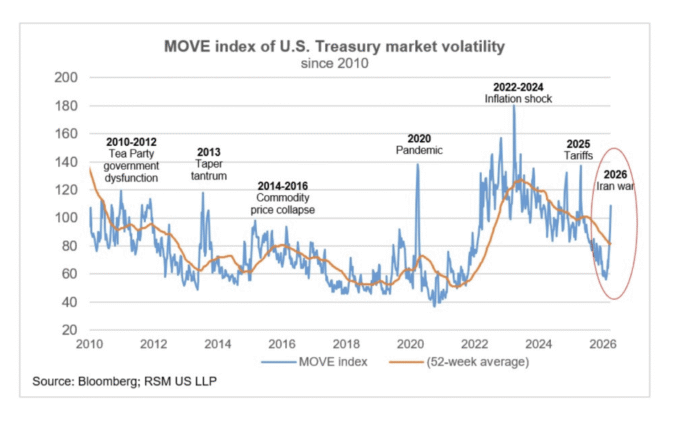
Joseph Brusuelas, Chief Economist at RSM, noted that the Treasury bond market is reacting to the conflict’s economic impact, leading to increased market volatility and a higher risk associated with buying Treasuries. This week, the two-year yield exceeded 4.0%, while the ten-year yield surpassed 4.4%.
The “MOVE index,” which measures volatility in the Treasury market, has significantly risen, indicating potential instability. If the current uncertainty persists, it may lead to broader stress in debt markets.
As the conflict continues, analysts predict it could last months, affecting borrowing costs. The federal government is also expected to refinance $10 trillion of debt due in the next year, alongside a budget deficit projected to reach $2 trillion. Increased corporate debt may further complicate the borrowing landscape, according to experts.
Test Your Understanding
How much do you know?