Warning: foreach() argument must be of type array|object, false given in /home/u750883576/domains/esl-news.com/public_html/wp-content/plugins/gpt-post-quiz/includes/admin/class-gpoq-admin-4.php on line 450
Warning: foreach() argument must be of type array|object, false given in /home/u750883576/domains/esl-news.com/public_html/wp-content/plugins/td-composer/legacy/common/wp_booster/td_menu.php on line 88
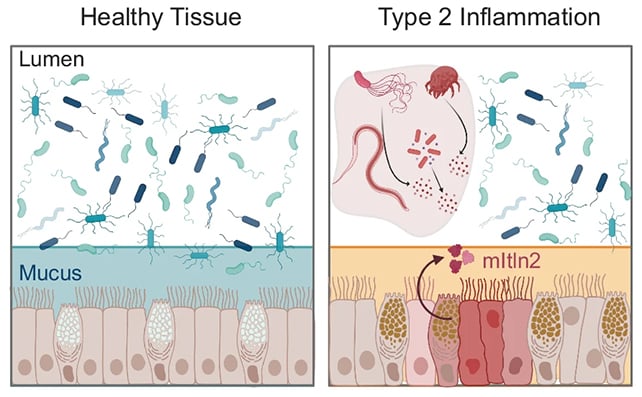
Researchers have found that a specific protein in the gut plays an important role in fighting bacteria. This discovery could help create treatments for diseases like inflammatory bowel disease.
The protein, called intelectin-2, is not new, but its function in the gastrointestinal (GI) tract was unclear. Intelectin-2 belongs to a group of proteins known as lectins, which attach to certain sugar molecules.
A team from MIT discovered that intelectin-2 helps in two ways. First, it connects mucus molecules in the GI tract, making the mucus barrier stronger to protect the intestinal tissues. If this barrier is damaged, intelectin-2 can also recognise and trap bacterial cells, either stopping their growth or killing them.
The researchers used various methods to study intelectin-2, including examining mouse and human tissue. They found that intelectin-2 targets galactose, a simple sugar found in mucus and on some bacterial surfaces. When it binds to bacteria, the bacteria break down over time.
Some of the bacteria that intelectin-2 fights have become resistant to antibiotics. These include Staphylococcus aureus, which can cause serious infections. Researchers believe that understanding and using proteins like intelectin-2 may lead to new ways to treat bacterial infections.
What is the name of the protein identified to play a role in fighting bacteria?
Lectin
Intelectin-1
Intelectin-2
Galactose
Which diseases could treatments based on intelectin-2 potentially address?
Inflammatory bowel disease
Diabetes
Cancer
Heart disease
What group of proteins does intelectin-2 belong to?
Enzymes
Hormones
Lectins
Antibodies
What simple sugar does intelectin-2 target?
Glucose
Fructose
Galactose
Sucrose
Which type of tissue was examined in the research study?
Skin tissue
Muscle tissue
Mouse and human tissue
Bone tissue
What can intelectin-2 do when the mucus barrier is damaged?
Enhance digestion
Recognise and trap bacterial cells
Reduce inflammation
Repair the barrier
Intelectin-2 is a newly discovered protein.
Intelectin-2 helps to strengthen the mucus barrier in the GI tract.
The research found that intelectin-2 can accelerate bacterial growth.
Some bacteria that intelectin-2 fights are resistant to antibiotics.
Intelectin-2 connects to sugar molecules in the blood.
Researchers believe that proteins like intelectin-2 can help in treating bacterial infections.
Researchers have found that a specific protein in the gut plays an important role in fighting bacteria. This discovery could help create treatments for diseases like inflammatory bowel disease _____ .
Researchers have found that a specific protein in the gut plays an important role in fighting bacteria. This discovery could help create treatments for diseases like inflammatory bowel disease .
The protein, called intelectin-2, is not new, but its function in the gastrointestinal (GI) tract was .
Intelectin-2 helps in two ways. First, it connects molecules in the GI tract, making the mucus barrier stronger.
When it binds to bacteria, the bacteria break down over .
Researchers used various methods to study intelectin-2, including examining mouse and tissue.
Some of the bacteria that intelectin-2 fights have become to antibiotics.
What is the name of the protein identified to play a role in fighting bacteria?
Lectin
Intelectin-1
Intelectin-2
Galactose
Which diseases could treatments based on intelectin-2 potentially address?
Inflammatory bowel disease
Diabetes
Cancer
Heart disease
What group of proteins does intelectin-2 belong to?
Enzymes
Hormones
Lectins
Antibodies
What simple sugar does intelectin-2 target?
Glucose
Fructose
Galactose
Sucrose
Which type of tissue was examined in the research study?
Skin tissue
Muscle tissue
Mouse and human tissue
Bone tissue
What can intelectin-2 do when the mucus barrier is damaged?
Enhance digestion
Recognise and trap bacterial cells
Reduce inflammation
Repair the barrier
Intelectin-2 is a newly discovered protein.
Intelectin-2 helps to strengthen the mucus barrier in the GI tract.
The research found that intelectin-2 can accelerate bacterial growth.
Some bacteria that intelectin-2 fights are resistant to antibiotics.
Intelectin-2 connects to sugar molecules in the blood.
Researchers believe that proteins like intelectin-2 can help in treating bacterial infections.
Researchers have found that a specific protein in the gut plays an important role in fighting bacteria. This discovery could help create treatments for diseases like inflammatory bowel disease _____ .
Researchers have found that a specific protein in the gut plays an important role in fighting bacteria. This discovery could help create treatments for diseases like inflammatory bowel disease .
The protein, called intelectin-2, is not new, but its function in the gastrointestinal (GI) tract was .
Intelectin-2 helps in two ways. First, it connects molecules in the GI tract, making the mucus barrier stronger.
When it binds to bacteria, the bacteria break down over .
Researchers used various methods to study intelectin-2, including examining mouse and tissue.
Some of the bacteria that intelectin-2 fights have become to antibiotics.