

Sunday, May 17, 2026

NASA Discovers Large Blue-Green Bloom Off U.S. East Coast

NASA satellites have observed a significant blue-green bloom along the shallow coastlines of New Jersey, Delaware, Maryland, and Virginia. First seen in mid-April, it has developed into large swirling patterns visible from space.

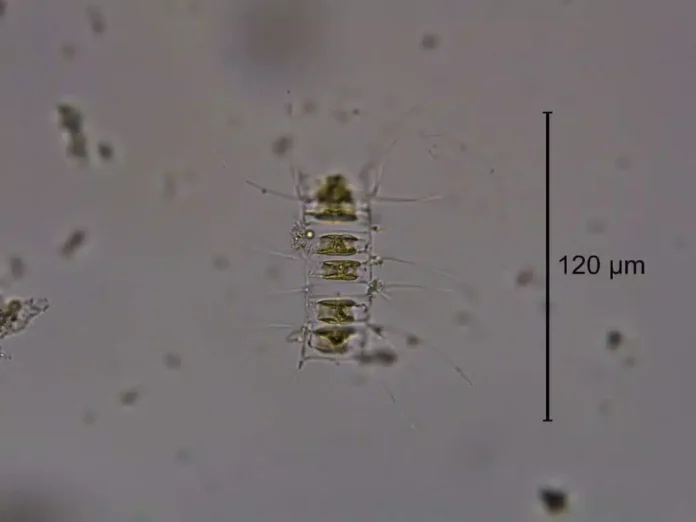
This bloom, which consists of a mix of blue, green, and brown waters, stretches for hundreds of kilometres along the eastern coast. NASA attributes its growth to a combination of river outflows, spring storms, and a high population of tiny marine organisms called phytoplankton. These organisms are essential for producing oxygen and are a crucial food source for many marine species.

Monitoring these blooms helps scientists understand ocean health. Satellite tools such as the MODIS (Moderate Resolution Imaging Spectroradiometer) on the Aqua satellite and the new PACE (Plankton, Aerosol, Cloud, Ocean Ecosystem) mission allow for precise tracking of these occurrences. They analyse ocean colour to identify the types and amounts of phytoplankton present.

The patterns seen from space result from natural water movement and the biology of the organisms. River outflows and storms mix nutrients into shallow waters, creating conditions that favour the growth of phytoplankton. While these blooms can reflect ocean health, large blooms can also lead to harmful algal events.

At present, the eastern U.S. bloom shows no signs of toxicity. However, experts warn that, without new nutrients from river outflows or storms, it may begin to decline in the coming weeks.

Test Your Understanding

Start Quiz

Vocabulary List:
6 words · tap to reveal
ON

Accent

bloom/bluːm/noun
large visible growth of tiny organisms in water

phytoplankton/ˌfaɪtoʊˈplæŋktən/noun
tiny living things in the ocean that make oxygen

satellites/ˈsætəˌlaɪts/noun
machines in space that take pictures of Earth

monitoring/ˈmɑnətərɪŋ/noun
watching something over time to learn

outflows/ˈaʊtˌfloʊz/noun
water that flows out from rivers into seas

toxicity/tɑkˈsɪsɪti/noun
how poisonous something is to living things

How much do you know?

Which technology is used by NASA to track ocean conditions?
MODIS
Hubble
Voyager
SOHO
What types of waters does the observed bloom consist of?
Red and blue
Blue and yellow
Blue, green, and brown
Green and orange
Which region does the bloom stretch along?
Western coast of the U.S.
Eastern coast of the U.S.
Southern coast of the U.S.
Northern coast of the U.S.
What is the primary marine organism responsible for the bloom's development?
Zooplankton
Phytoplankton
Fish
Coral
When was the bloom first observed?
Early March
Mid-April
Late May
Early January
What do scientists monitor to understand ocean health?
Weather patterns
Fish population
Bloom patterns
Plastic waste
The bloom shows signs of toxicity currently.
Phytoplankton are essential for producing oxygen.
The MODIS system is only used for land observations.
The bloom is solely caused by the warm weather in spring.
River outflows and storms contribute nutrients to the ocean.
Large blooms are always beneficial to marine ecosystems.
NASA satellites have observed a significant blue-green bloom along the coastlines of New Jersey, Delaware, Maryland, and .
The bloom consists of a mix of blue, green, and brown waters that stretches for hundreds of kilometres along the coast.
Phytoplankton are a crucial food source for many marine .
Monitoring these blooms helps scientists understand ocean .
The patterns seen from space result from natural water movement and the of the organisms.
At present, the eastern U.S. bloom shows no signs of .
This question is required

Test Your Understanding

Start Quiz
Vocabulary List:
6 words · tap to reveal
ON
Accent
bloom/bluːm/noun
large visible growth of tiny organisms in water
phytoplankton/ˌfaɪtoʊˈplæŋktən/noun
tiny living things in the ocean that make oxygen
satellites/ˈsætəˌlaɪts/noun
machines in space that take pictures of Earth
monitoring/ˈmɑnətərɪŋ/noun
watching something over time to learn
outflows/ˈaʊtˌfloʊz/noun
water that flows out from rivers into seas
toxicity/tɑkˈsɪsɪti/noun
how poisonous something is to living things

How much do you know?

Which technology is used by NASA to track ocean conditions?
MODIS
Hubble
Voyager
SOHO
What types of waters does the observed bloom consist of?
Red and blue
Blue and yellow
Blue, green, and brown
Green and orange
Which region does the bloom stretch along?
Western coast of the U.S.
Eastern coast of the U.S.
Southern coast of the U.S.
Northern coast of the U.S.
What is the primary marine organism responsible for the bloom's development?
Zooplankton
Phytoplankton
Fish
Coral
When was the bloom first observed?
Early March
Mid-April
Late May
Early January
What do scientists monitor to understand ocean health?
Weather patterns
Fish population
Bloom patterns
Plastic waste
The bloom shows signs of toxicity currently.
Phytoplankton are essential for producing oxygen.
The MODIS system is only used for land observations.
The bloom is solely caused by the warm weather in spring.
River outflows and storms contribute nutrients to the ocean.
Large blooms are always beneficial to marine ecosystems.
NASA satellites have observed a significant blue-green bloom along the coastlines of New Jersey, Delaware, Maryland, and .
The bloom consists of a mix of blue, green, and brown waters that stretches for hundreds of kilometres along the coast.
Phytoplankton are a crucial food source for many marine .
Monitoring these blooms helps scientists understand ocean .
The patterns seen from space result from natural water movement and the of the organisms.
At present, the eastern U.S. bloom shows no signs of .
This question is required

Read More


