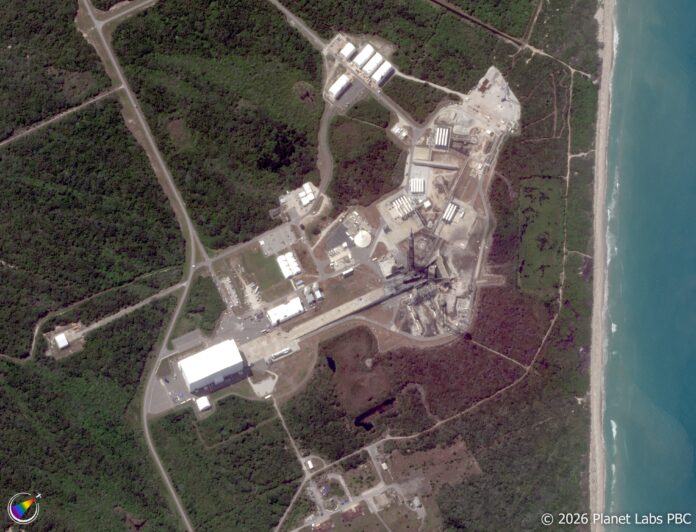
The recent explosion of Blue Origin’s New Glenn rocket has impacted Florida’s Space Coast significantly. On May 28, during a fueling test for its fourth mission, an unidentified failure led to the total destruction of the rocket and serious damage to Launch Complex-36 (LC-36). Fortunately, there were no injuries; however, the incident has considerably hindered Blue Origin’s ability to support NASA’s Artemis missions, which aim to return astronauts to the Moon. This setback also affects the development of Amazon’s Leo wireless internet constellation, intended to compete with SpaceX’s Starlink.
Satellite images show extensive damage around the half-mile-wide New Glenn launchpad and nearby scorched vegetation. LC-36 is Blue Origin’s only launch site for their larger rockets. Damage to the facility is so severe that it is visible from space. The launch tower, flame trench, and other support structures were left in ruins.
Blue Origin is currently evaluating the damage and planning repairs. CEO Dave Limp noted that cleanup would begin soon. He and founder Jeff Bezos inspected the site alongside NASA Administrator Jared Isaacman, who pledged full support for the investigation.
New Glenn is crucial for NASA’s ambitions to land astronauts on the Moon, with Blue Origin’s Blue Moon lander under contract for lunar missions. Delays in repairing LC-36 will postpone upcoming launches, particularly for the Blue Moon MK1 mission, which aims to transport NASA equipment to the Moon.
Historical precedents show that recovery from such incidents can take considerable time. SpaceX’s experience after a similar accident in 2016 took just over a year. No timeline for repairs has been provided by Blue Origin, although Bezos remains optimistic about the company’s future missions.
Test Your Understanding
How much do you know?