

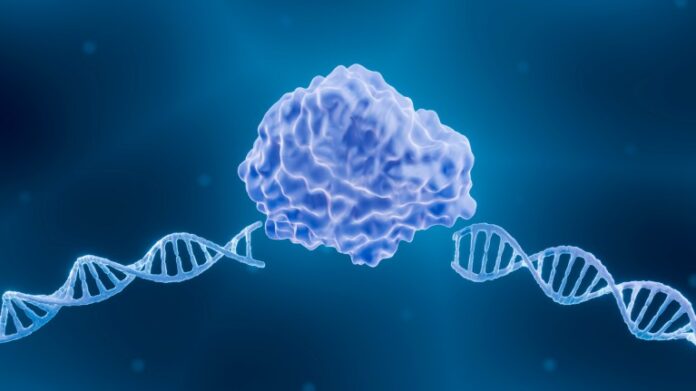
Scientists have used artificial intelligence (AI) to create new CRISPR proteins that edit genes better than natural ones. This discovery could help in areas like medicine and farming. The research was published on 16 July in the journal Science.
Soeren Lienkamp, a molecular biologist from the University of Zurich, notes that AI can help design new proteins easily, similar to how CRISPR made gene editing more accessible. He believes this study combines important fields: AI design and enzymes called RNA-guided nucleases. These nucleases can cut DNA and RNA.
CRISPR uses a guide RNA to direct nucleases to a specific DNA section, acting like scissors to edit genetic material. These tools are based on bacteria’s natural defence against viruses. However, gene editing is complicated. Jennifer Doudna, a biochemist at the University of California, Berkeley, explains that making changes can lead to non-functional proteins.
AI can speed up finding new, useful nucleases. Instead of many experiments, scientists could let AI help. Doudna’s team worked on creating synthetic versions of small nucleases called TnpBs. They wanted to see how much they could change these proteins while keeping their gene-editing ability.


