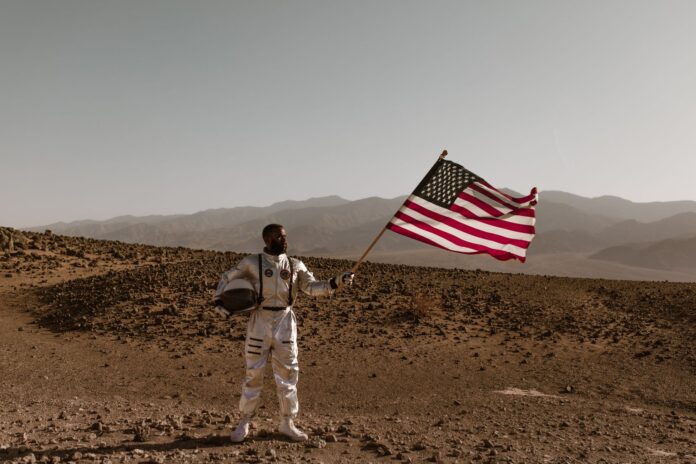
The six American flags placed on the Moon between July 1969 and December 1972 are likely no longer their original red, white, and blue. After over fifty years of exposure to harsh lunar conditions, including intense ultraviolet light and temperature changes, the dyes have probably deteriorated significantly.
Current images suggest that five flags are still standing, but their colours have likely faded to a stark cloth. NASA’s records show that these flags were not built to last. They were made of nylon and designed to look like they were flying without wind, a challenge the team solved with a hinged rod. Their primary purpose was to be visible during the brief broadcasts on the Moon, rather than to endure for decades.
On Earth, the atmosphere protects materials from damaging radiation, but the Moon lacks this shield. Ultraviolet radiation hits the lunar surface unfiltered, quickly breaking down synthetic dyes. Red dyes are particularly vulnerable, and while blue may last longer, it is not immune.
Moreover, the extreme temperatures on the Moon can shift from 120°C to below freezing. This constant cycling leads to material fatigue in the nylon, causing it to weaken and break.
Lunar photographs taken by the Lunar Reconnaissance Orbiter show that the flags appear to still cast shadows. However, it is impossible to determine their colours from these images. As time passes, artifacts from the Apollo missions face degradation, showing the relentless effects of the lunar environment. Future visitors to the Moon will encounter the remnants of these flags, now transformed by time into ghostly reminders of humanity’s first steps on another world.
Test Your Understanding
How much do you know?