

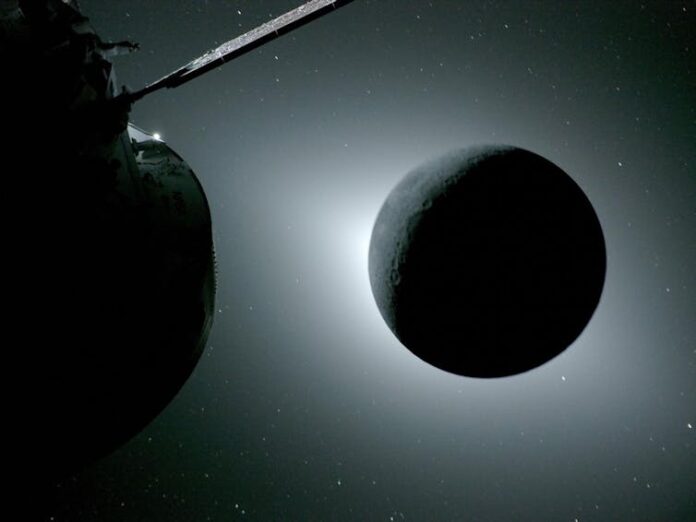
The Artemis II crew is set to return to Earth after completing their successful mission to the Moon. The four astronauts travelled a record distance of 406,771 kilometres away from Earth during their journey.
Their return will involve a high-speed re-entry into Earth’s atmosphere, with a planned splashdown in the Pacific Ocean off the California coast at around 8 pm local time on April 10. This final stage presents significant challenges but is made safer by advanced technology in their spacecraft.
The Orion capsule is expected to travel at more than 11 km/s (about 40,000 km/h) upon re-entry—much faster than a typical passenger jet. This rapid speed results in very high kinetic energy, which must be reduced to ensure a safe landing. To slow down, the spacecraft will use a controlled descent through the upper atmosphere, leveraging aerodynamic drag.
During re-entry, the Orion capsule will experience extremely high temperatures, reaching over 10,000°C. A shock wave will surround the spacecraft, temporarily blocking radio signals and cutting off communication with the astronauts.
To cope with the extreme conditions, the spacecraft is equipped with a thermal protection system that insulates against heat. This system allows the craft to withstand high temperatures while maintaining a manageable heat shield surface temperature of around 3,000°C.
Engineers reviewed the heat shield from the previous Artemis I mission, which lost material upon re-entry. For Artemis II, they have adjusted the spacecraft’s trajectory to minimise risks. Following these careful preparations, the mission team looks forward to their safe return.


