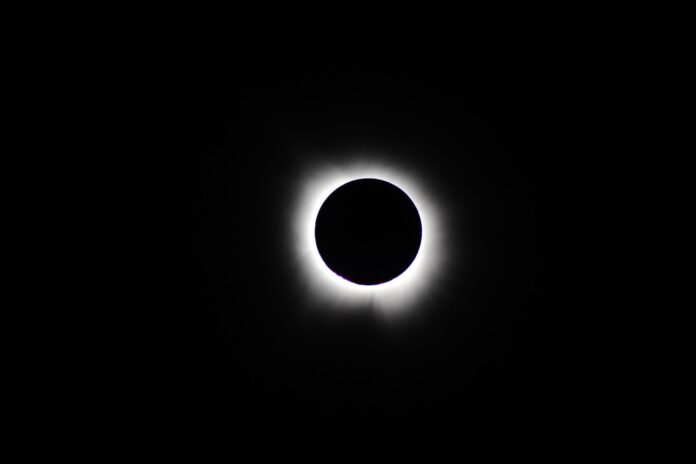
On July 23, 2012, NASA’s STEREO-A spacecraft encountered a coronal mass ejection (CME) that explosively erupted from the Sun. The incident marked a Carrington-class intensity event, similar to the infamous 1859 solar storm, although Earth remained unaffected while STEREO-A captured invaluable data. This unprecedented in-situ measurement provides scientists with a unique understanding of extreme solar storms.
Launched in 2006 alongside its twin, STEREO-B, STEREO-A was designed to observe the Sun from different angles, allowing researchers to create three-dimensional models of solar eruptions. By July 2012, STEREO-A had drifted ahead of Earth, placing it in the direct line of the CME, which had rotated past Earth’s view and was pointed directly at the spacecraft.
Typically, CMEs travel at several hundred kilometres per second and take days to reach Earth. However, this event, consisting of two rapidly succeeding CMEs, reached STEREO-A at an astounding speed of 3,000 kilometres per second. The spacecraft’s instruments recorded elevated magnetic fields and plasma characteristics near unprecedented levels, generating data that resembled historical estimates of how a similar storm would affect Earth.
At the time of the eruption, the responsible solar region was no longer facing Earth after rotating past its central meridian. This positioning ultimately spared our planet from potential electromagnetic disruption, which could have caused extensive damage to electrical infrastructures.
Prior to this event, predictions about the impact of a Carrington-class storm relied on historical accounts, sparse observational data, and theoretical models. STEREO-A’s precise measurements now offer a benchmark for understanding such extreme events.
Current analyses suggest that a similarly intense solar storm could disrupt critical electrical systems across North America and Europe. The financial ramifications of a direct strike could reach trillions of pounds, with recovery taking several years. As STEREO-A continues to function, its data remains pivotal in predicting the risks posed by future solar storms.
Test Your Understanding
How much do you know?