Warning: foreach() argument must be of type array|object, false given in /home/u750883576/domains/esl-news.com/public_html/wp-content/plugins/gpt-post-quiz/includes/admin/class-gpoq-admin-4.php on line 450
Warning: foreach() argument must be of type array|object, false given in /home/u750883576/domains/esl-news.com/public_html/wp-content/plugins/td-composer/legacy/common/wp_booster/td_menu.php on line 88
Every day, people touch many surfaces, such as kitchen counters, phone screens, and bus handrails. These surfaces can carry harmful viruses and germs, spreading illness easily. Infections often happen when someone touches a surface and then touches their face, particularly their eyes, nose, or mouth.
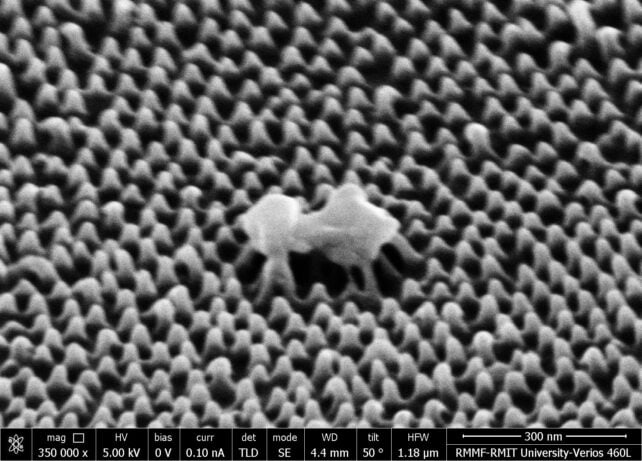
While cleaning surfaces can help, many cleaning products can harm the environment and cause germs to become resistant to medicines. A new study published in Advanced Science introduces a thin plastic surface with tiny features that can break apart viruses, including human parainfluenza virus type 3 (hPIV-3). This material can make surfaces like mobile phones and hospital equipment much safer.
Current cleaning methods require disinfectants to stay wet for a while and can be challenging in busy places. Moreover, surfaces can quickly get contaminated again. The new material is affordable, flexible, and features thousands of tiny pillars that stretch and burst the virus’s outer shell.
Tests showed that up to 94% of virus particles could be destroyed in just one hour on this surface. This invention could change how we protect ourselves from viruses and reduce our reliance on chemical cleaning products.
What can help reduce the spread of illness from surfaces?
Cleaning surfaces
Ignoring surfaces
Touching faces
Using less water
What does the new material introduced in the study do?
Spreads viruses
Destroys bacteria
Breaks apart viruses
Creates new surfaces
Which virus is specifically mentioned in the study?
Influenza virus
hPIV-3
COVID-19
Ebola virus
Why are current cleaning methods challenging in busy places?
Disinfectants need to stay wet for a while
They are too expensive
They use too much water
They require special equipment
How much of the virus particles could be destroyed in just one hour on the new surface?
70%
85%
94%
100%
What is the new material described as?
Affordably flexible
Long-lasting
Heavy and rigid
Expensive and delicate
Busy places are easy to keep clean with current methods.
The new material can potentially make surfaces safer.
Cleaning products do not impact the environment at all.
Infections often occur when touching a contaminated surface then the face.
The study was published in a journal called Advanced Science.
The new surface requires no cleaning at all.
The new study introduces a thin plastic surface that can break apart viruses, including human parainfluenza virus type 3 (hPIV-3), making surfaces like mobile phones and hospital equipment much .
Current cleaning methods require disinfectants to stay wet for a .
Surfaces can carry harmful viruses and , spreading illness easily.
Tests showed that up to 94% of virus particles could be destroyed in just one on this surface.
The new material is affordable, flexible, and features thousands of tiny that stretch and burst the virus’s outer shell.
Cleaning surfaces can help, but many cleaning products can harm the .
What can help reduce the spread of illness from surfaces?
Cleaning surfaces
Ignoring surfaces
Touching faces
Using less water
What does the new material introduced in the study do?
Spreads viruses
Destroys bacteria
Breaks apart viruses
Creates new surfaces
Which virus is specifically mentioned in the study?
Influenza virus
hPIV-3
COVID-19
Ebola virus
Why are current cleaning methods challenging in busy places?
Disinfectants need to stay wet for a while
They are too expensive
They use too much water
They require special equipment
How much of the virus particles could be destroyed in just one hour on the new surface?
70%
85%
94%
100%
What is the new material described as?
Affordably flexible
Long-lasting
Heavy and rigid
Expensive and delicate
Busy places are easy to keep clean with current methods.
The new material can potentially make surfaces safer.
Cleaning products do not impact the environment at all.
Infections often occur when touching a contaminated surface then the face.
The study was published in a journal called Advanced Science.
The new surface requires no cleaning at all.
The new study introduces a thin plastic surface that can break apart viruses, including human parainfluenza virus type 3 (hPIV-3), making surfaces like mobile phones and hospital equipment much .
Current cleaning methods require disinfectants to stay wet for a .
Surfaces can carry harmful viruses and , spreading illness easily.
Tests showed that up to 94% of virus particles could be destroyed in just one on this surface.
The new material is affordable, flexible, and features thousands of tiny that stretch and burst the virus’s outer shell.
Cleaning surfaces can help, but many cleaning products can harm the .