

A deep-sea expedition off the coast of Argentina has uncovered a surprisingly diverse marine ecosystem, revealing dozens of possible new species and rare sightings. What began as a focused study of cold seeps quickly expanded to show a complex and rich web of life.
Scientists from the Schmidt Ocean Institute led this mission aboard the research vessel Falkor (too). They aimed to explore cold seeps, areas in the deep ocean where chemical emissions support unique microbial communities that serve as the foundation for various ecosystems.
The team discovered only one active seep site. However, they encountered an unexpected density and variety of marine life across a larger area, indicating that these ecosystems may extend well beyond isolated chemical hotspots.
The level of biodiversity recorded during the expedition surprised researchers. Instead of clusters forming around seep zones, organisms were distributed over a much wider section of the seafloor. Chief scientist María Emilia Bravo expressed excitement about the findings, highlighting the need for further exploration of Argentina’s deep-sea life.
The expedition also identified 28 potential new species, including sea snails and sea urchins, many found in a massive coral reef nearly as large as Vatican City. This reef demonstrates how complex ecosystems can thrive in deep, dark waters.
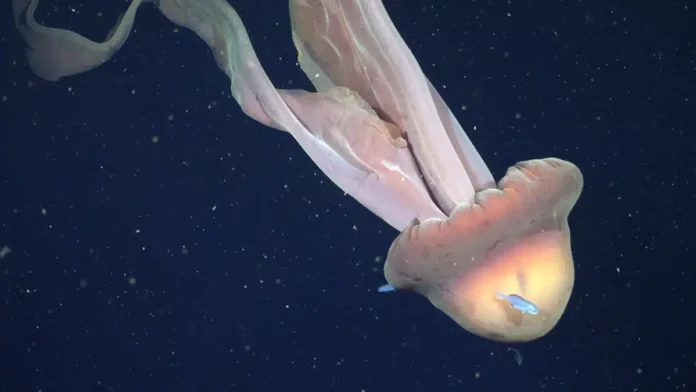
Additionally, the team captured images of the rare phantom jellyfish, which can grow as long as a school bus, and documented Argentina’s first deep-sea whale fall, where a whale’s remains now support various marine organisms.
Looking ahead, researchers anticipate that ongoing studies will deepen our understanding of deep-sea biodiversity.


