Warning: foreach() argument must be of type array|object, false given in /home/u750883576/domains/esl-news.com/public_html/wp-content/plugins/gpt-post-quiz/includes/admin/class-gpoq-admin-4.php on line 450
Warning: foreach() argument must be of type array|object, false given in /home/u750883576/domains/esl-news.com/public_html/wp-content/plugins/td-composer/legacy/common/wp_booster/td_menu.php on line 88
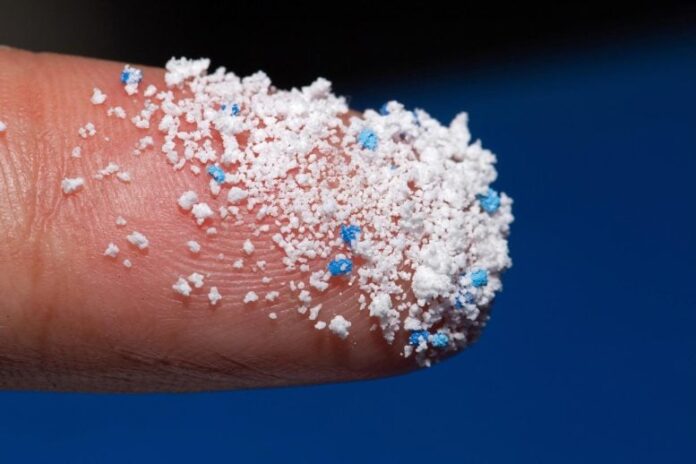
Scientists in South Korea have discovered that a bacterium from kimchi can help remove tiny plastic particles from the human body. This finding is important because plastic pollution is a growing health concern. Researchers at the World Institute of Kimchi report that this bacterium attaches to nanoplastics and microplastics in the gut, which may help carry them out of the body.
Nanoplastics are very small plastic particles, less than 1 micrometer in size. Microplastics are slightly larger, measuring less than 5 millimeters. These particles come from larger plastics that break down in the environment. They are now found in food and drinking water, and they can enter the body and settle in organs like the brain and kidneys.
The research team, led by Dr. Se Hee Lee, tested a kimchi-derived bacterium called Leuconostoc mesenteroides CBA3656. This strain was very effective in binding to polystyrene nanoplastics. In lab tests, it had an adsorption rate of 87%. When tested in mice, those given this bacterium excreted more than double the amount of nanoplastics compared to those without it.
The study suggests that kimchi bacteria may provide a new way to address plastic pollution in the body.
Test Your Understanding
Start Quiz
How much do you know?
What is the name of the bacterium discovered in kimchi by scientists in South Korea?
Leuconostoc mesenteroides CBA3656
Bacillus subtilis
Lactobacillus plantarum
Streptococcus thermophilus
What is the smallest size of nanoplastics?
1 millimeter
1 micrometer
5 millimeters
10 micrometers
Who led the research team that studied the bacterium from kimchi?
Dr. Se Hee Lee
Dr. Kim Jong Un
Dr. Park Min Soo
Dr. Lee Sun Kyung
What is the adsorption rate of the kimchi-derived bacterium to polystyrene nanoplastics?
50%
67%
75%
87%
What health concern does plastic pollution represent?
A growing health concern
A minor issue
Nothing to worry about
Only a concern for animals
What organ did the plastic particles settle in as mentioned in the text?
Liver
Heart
Brain
Lungs
The research shows that kimchi bacteria can reduce plastic particles in the human body.
Microplastics are smaller than nanoplastics.
The bacterium tested in mice had an ADSORPTION rate of 87%.
Kimchi-derived bacteria have no effect on polystyrene nanoplastics.
Plastic pollution is not considered a health concern according to the study.
The bacterium from kimchi can help carry plastic particles out of the body.
The study focused on a bacterium called mesenteroides CBA3656.
Nanoplastics are very small plastic particles, less than _____ micrometer in size.
Nanoplastics are very small plastic particles, less than micrometer in size.
Microplastics are slightly larger, measuring less than millimeters.
The research suggests that kimchi bacteria may provide a new way to address plastic in the body.
The research team reported that the bacterium attaches to in the gut.
In lab tests, the bacterium had an adsorption rate of percent.