Wednesday, April 1, 2026

Scientists Unearth Baffling Fossils Beneath Antarctic Ice

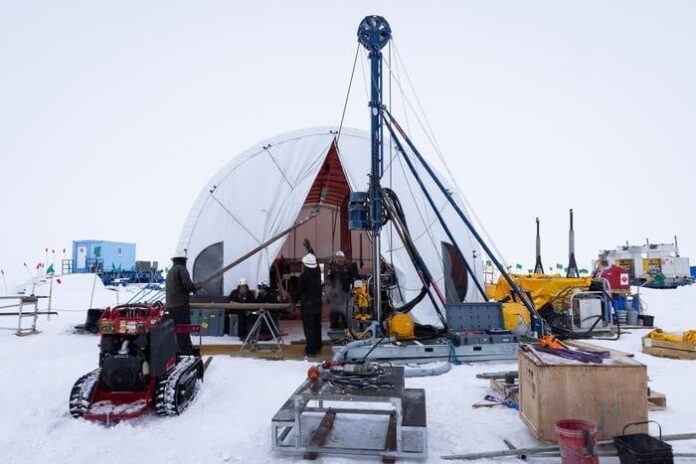
A team of 29 scientists, drillers, and engineers has spent nearly ten weeks living in tents on the snow in West Antarctica. They drilled over 200 meters into bedrock, a feat never accomplished before in such a remote area.

On their third attempt, they succeeded in pulling up a 228-meter cylinder of mud and rock from beneath the Crary Ice Rise. This is the deepest sediment core ever recovered from beneath an Antarctic ice sheet. The layers in this core reveal a history of changes in the West Antarctic Ice Sheet, challenging previous scientific beliefs about its stability.

To reach the sediment, the team melted a hole through 523 meters of ice using a hot-water drill. They then extracted various types of sediment, with some layers containing surprising evidence of life that requires light, indicating there was once no ice in this area.

Preliminary studies suggest that the sediment core spans about 23 million years, including times when global temperatures were higher than today. This is crucial for understanding how the West Antarctic Ice Sheet could behave in a warming climate.

The core has now been transported to Scott Base and will be sent to New Zealand for further analysis. Scientists from over 50 research organisations will study it to learn more about past climate conditions and prepare better forecasts for coastal communities affected by rising sea levels.

Test Your Understanding

Start Quiz

Vocabulary List:
6 words · tap to reveal
ON

Accent

drilled/drɪld/verb
made a hole by using a tool

sediment/ˈsɛdəmənt/noun
small pieces of rock or soil at bottom

core/kɔr/noun
long, round sample taken from deep ground

bedrock/ˈbɛdˌrɑk/noun
solid rock layer under soil and loose rock

stability/stəˈbɪlɪti/noun
how likely something stays the same

preliminary/prɪˈlɪməˌnɛri/adjective
done early before final work or results

How much do you know?

How many scientists, drillers, and engineers were part of the team in West Antarctica?
15
29
50
45
What is the length of the sediment core that was recovered?
200 meters
228 meters
523 meters
150 meters
What technique did the team use to reach the sediment?
Hand drilling
Core drilling
Hot-water drilling
Explosive drilling
From which location was the sediment core pulled?
Scott Base
Crary Ice Rise
Antarctic Peninsula
South Pole
How long did the team spend living in tents on the snow?
Five weeks
Eight weeks
Ten weeks
Twelve weeks
What will the sediment core be sent to New Zealand for?
Burial
Storage
Further analysis
Presentation
The team drilled over 300 meters into bedrock.
The sediment core reveals changes in the West Antarctic Ice Sheet.
A layer of the sediment was found to contain no evidence of life.
The core has been sent directly to Antarctica for analysis.
The research involved a collaboration of over 50 organizations.
The sediment core spans approximately 10 million years.
The team has spent nearly ten weeks living in tents on the snow in West Antarctica for purposes.
The layers in the sediment core have a history of in the West Antarctic Ice Sheet.
The sediment core is significant for understanding how the West Antarctic Ice Sheet could behave in a climate.
The core was pulled from a depth of 228 meters beneath the Ice Rise.
The team melted a hole through 523 meters of ice using a drill.
Preliminary studies suggest the sediment core spans about million years.
This question is required

Test Your Understanding

Start Quiz
Vocabulary List:
6 words · tap to reveal
ON
Accent
drilled/drɪld/verb
made a hole by using a tool
sediment/ˈsɛdəmənt/noun
small pieces of rock or soil at bottom
core/kɔr/noun
long, round sample taken from deep ground
bedrock/ˈbɛdˌrɑk/noun
solid rock layer under soil and loose rock
stability/stəˈbɪlɪti/noun
how likely something stays the same
preliminary/prɪˈlɪməˌnɛri/adjective
done early before final work or results

How much do you know?

How many scientists, drillers, and engineers were part of the team in West Antarctica?
15
29
50
45
What is the length of the sediment core that was recovered?
200 meters
228 meters
523 meters
150 meters
What technique did the team use to reach the sediment?
Hand drilling
Core drilling
Hot-water drilling
Explosive drilling
From which location was the sediment core pulled?
Scott Base
Crary Ice Rise
Antarctic Peninsula
South Pole
How long did the team spend living in tents on the snow?
Five weeks
Eight weeks
Ten weeks
Twelve weeks
What will the sediment core be sent to New Zealand for?
Burial
Storage
Further analysis
Presentation
The team drilled over 300 meters into bedrock.
The sediment core reveals changes in the West Antarctic Ice Sheet.
A layer of the sediment was found to contain no evidence of life.
The core has been sent directly to Antarctica for analysis.
The research involved a collaboration of over 50 organizations.
The sediment core spans approximately 10 million years.
The team has spent nearly ten weeks living in tents on the snow in West Antarctica for purposes.
The layers in the sediment core have a history of in the West Antarctic Ice Sheet.
The sediment core is significant for understanding how the West Antarctic Ice Sheet could behave in a climate.
The core was pulled from a depth of 228 meters beneath the Ice Rise.
The team melted a hole through 523 meters of ice using a drill.
Preliminary studies suggest the sediment core spans about million years.
This question is required

Read More