

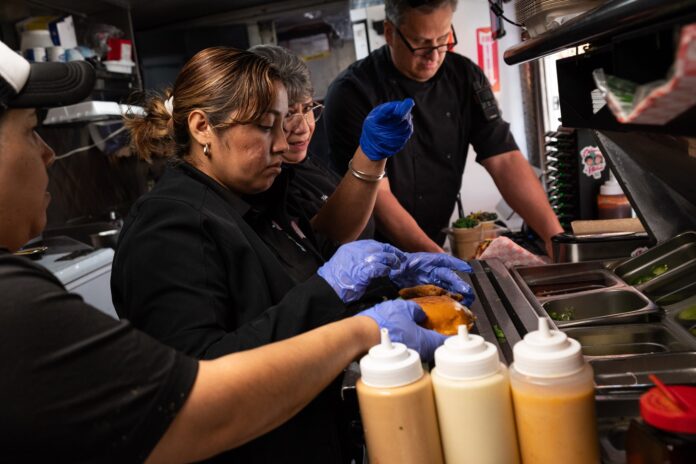
Eloisa Schessler and her husband launched Eloisa’s Kitchen Food Truck in Dallas to support their daughter, who had experienced a significant head injury. Through diligent effort, the family developed a small business where their daughter serves as sous chef and oversees the truck’s creative design. Gradually, they observed improvements in her condition.
However, excessive government regulations hinder the food truck’s potential growth. The family wishes to expand their service to other cities, yet each location requires a costly permit that necessitates taking time off work for inspections. Schessler expressed frustration over the financial loss incurred during this process.
A new law, House Bill 2844, passed last year and effective from July 1, aims to alleviate some of the financial burdens on food truck operators. The legislation mandates the Department of State Health Services (DSHS) to establish a statewide operating permit applicable to all Texas food trucks. Currently, operators incur separate fees for each city’s permits, which can total hundreds of dollars, despite similar inspection standards among jurisdictions.
Despite these anticipated benefits, some cities oppose the new law, fearing it diminishes local control over food truck operations. For example, the City of Dallas imposes a considerable application fee, while Amarillo charges between $800 and $900 for permits.
DSHS is currently finalising implementation strategies under the new bill. It will categorise food trucks based on food preparation methods, and it is projected that the state will issue licenses to approximately 19,000 food trucks at fees ranging from $300 to $1,350 initially, followed by renewal costs.
Some local officials assert concerns about losing revenue from permit fees, while state officials predict the new system will ultimately benefit the majority of food truck owners by allowing greater operational flexibility. As a result, food truck operators anticipate increased opportunities for business growth as they navigate fewer regulatory challenges.


