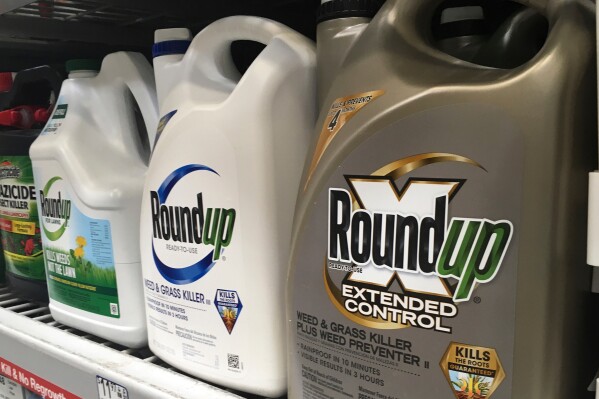
Agrochemical company Bayer has proposed a $7.25 billion settlement to resolve thousands of lawsuits in the United States. These lawsuits accuse Bayer of failing to inform consumers that its widely used weedkiller Roundup might lead to cancer.
This settlement emerges ahead of a scheduled U.S. Supreme Court hearing in April, where Bayer argues that the Environmental Protection Agency (EPA) approved Roundup without a cancer warning, which they believe should nullify state court claims against the company. However, this case will not be impacted by the proposed settlement.
The agreement could mitigate the company’s financial risks associated with a potential adverse ruling from the Supreme Court. If the court sides with Bayer, affected patients would still receive compensation from the settlement. Conversely, if the ruling favours the plaintiffs, the settlement would help Bayer avoid greater financial liabilities.
Bayer, which acquired Monsanto in 2018 and inherited Roundup, contests claims linking its key ingredient, glyphosate, to non-Hodgkin lymphoma, a type of cancer. Nonetheless, the company acknowledges that ongoing litigation is straining its capacity to market Roundup in U.S. agricultural sectors.
Filed in St. Louis Circuit Court, the settlement requires court approval and aims to address approximately 200,000 claims related to Roundup. It stipulates that Bayer will pay into a fund for up to 21 years, with individual payouts varying based on the level of exposure, age at diagnosis, and severity of the illness. For instance, a worker diagnosed with an aggressive cancer before age 60 could receive an average of $165,000.
Despite enthusiasm from some quarters, concerns linger regarding the adequacy of the proposed payouts. Critics, including attorneys representing plaintiffs, maintain that the amounts offered are insufficient. Meanwhile, in an interesting twist, Bayer has received support from the Trump administration regarding its legal strategies against state-level lawsuits, reflecting ongoing political interplay in environmental and public health matters.
Test Your Understanding
How much do you know?