

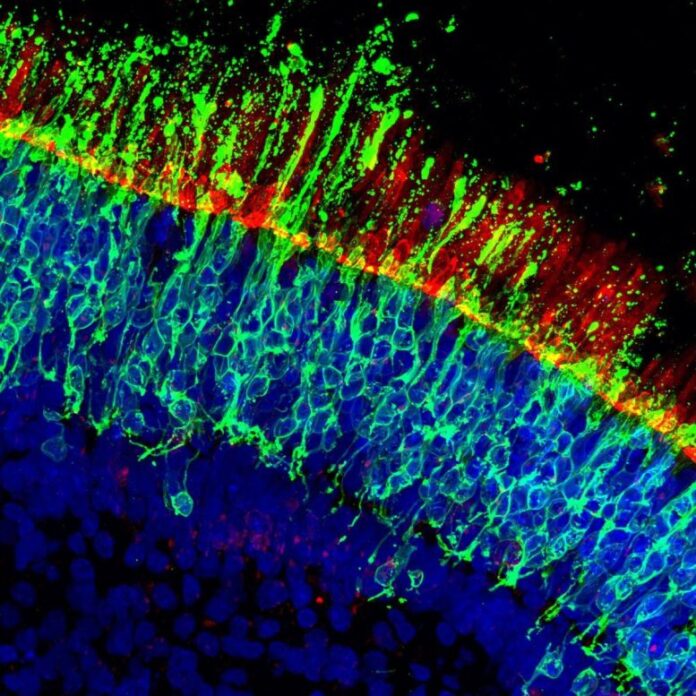
Scientists have discovered molecules that can safeguard cone cells in the eye from degeneration, a significant factor in vision loss. This finding could lead to new drug targets and highlight potentially harmful compounds.
A research team led by Botond Roska at the Institute of Molecular and Clinical Ophthalmology Basel (IOB), in collaboration with an international group, explored genetic pathways and chemical compounds capable of protecting cone photoreceptors. These cells are affected in conditions such as age-related macular degeneration, a leading contributor to vision impairment.
Cone photoreceptors, found in the macula, are essential for activities like reading, identifying faces, and perceiving colour. Damage to these cells, seen in various inherited retinal disorders and macular degeneration, causes a decline in central vision. Despite extensive research, no approved treatments exist to halt this degeneration. This critical study employs a human-based experimental model to confront this issue.
The team screened over 2,700 compounds across 20,000 human retinal organoids. Their results revealed both risks and protective measures. They found that some compounds could harm cone cells, raising important safety issues, while others successfully guarded against degeneration. Notably, inhibiting casein kinase 1 emerged as a key strategy for protecting these cells.
To conduct the study, scientists specifically labelled cone photoreceptors, allowing them to monitor cell survival under stress conditions that mimicked disease. This approach facilitated a thorough examination of compounds with known molecular targets.
Additionally, the researchers reported a publicly available dataset detailing all tested compounds, their molecular targets, and their effects on cone survival in human tissue. This resource intends to aid in the development of treatments aimed at preserving central vision and evaluating potential retinal toxicity.
Combining advancements in retinal biology, organoid technology, and extensive drug screening, this research paves the way for future therapies. It moves scientists closer to achieving a long-held goal in eye research: ensuring the protection of cells vital for clear vision.
Test Your Understanding
How much do you know?