

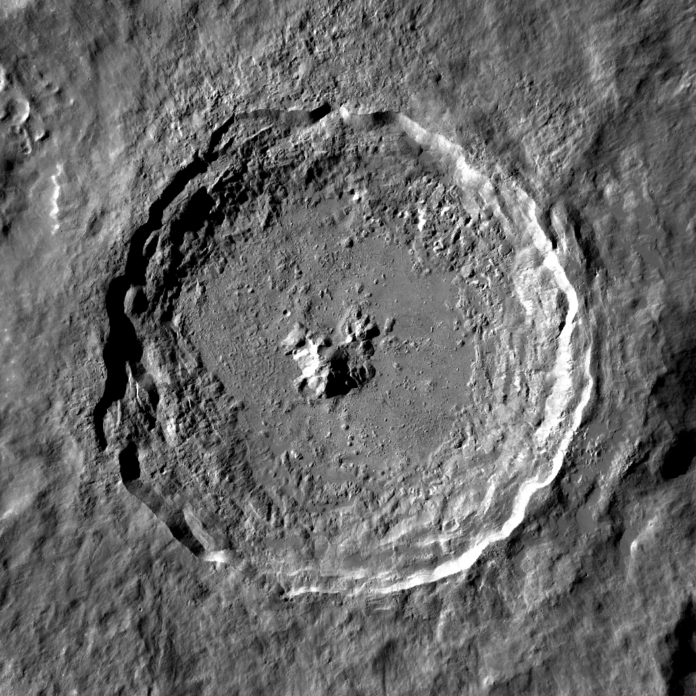
Look up at a full Moon on a clear night, and you see a surface marked by billions of years of impacts. The dark patches are large basins created by huge space rocks crashing into the Moon. The lighter areas have many craters, each one a sign of a collision long before humans existed. The Moon has no weather to change its surface, so what hits it, stays there.
The Moon is still being struck by space rocks every day. These impacts create new craters on a surface that lacks weather, erosion, or anything to hide behind. While scientists know these impacts happen, they rarely observe them as they occur.
In late spring 2024, a significant impact occurred on the Moon. A space rock hit the surface, creating a crater 225 metres wide, similar in size to two football pitches. Thanks to NASA’s Lunar Reconnaissance Orbiter Camera, scientists compared images taken before and after the event. Before this, the largest crater discovered during the mission was only 70 metres wide. This new crater is more than three times larger, an event that should only happen once every 139 years.
The crater is funnel-shaped and 43 metres deep, with steep walls. Around it, large blocks of rock were thrown out by the impact. The impact’s direction can be traced by how the debris is spread. Inside, scientists found dark glassy rock formed by the intense heat of the collision. The high-quality images taken before and after the impact will help researchers understand how craters form, not just on the Moon, but throughout the Solar System.
Test Your Understanding
How much do you know?