Warning: foreach() argument must be of type array|object, false given in /home/u750883576/domains/esl-news.com/public_html/wp-content/plugins/gpt-post-quiz/includes/admin/class-gpoq-admin-4.php on line 450
Warning: foreach() argument must be of type array|object, false given in /home/u750883576/domains/esl-news.com/public_html/wp-content/plugins/td-composer/legacy/common/wp_booster/td_menu.php on line 88
Recent studies have focused on the measurement of the proton’s radius, which has caused confusion in the scientific community. Several experiments have produced different results over the years. In 2010, an international team reported a value of 0.84 femtometers. This measurement led to a discrepancy in the understanding of the proton’s size, which is important in physics.
In 2013, the same team confirmed their finding through muon-based experiments, producing a similar measurement. Researchers later conducted a 2016 experiment with a heavier hydrogen isotope, which also supported the 2010 result. However, studies in 2017 and 2018 using regular hydrogen showed mixed results. The 2017 study matched the 2010 value, while the 2018 measurement suggested a larger size.
In 2019, scientists from York University aimed to clarify the conflicting results. They measured the proton’s radius using electrons and found a value of 0.833 femtometers, again aligning with the earlier finding.
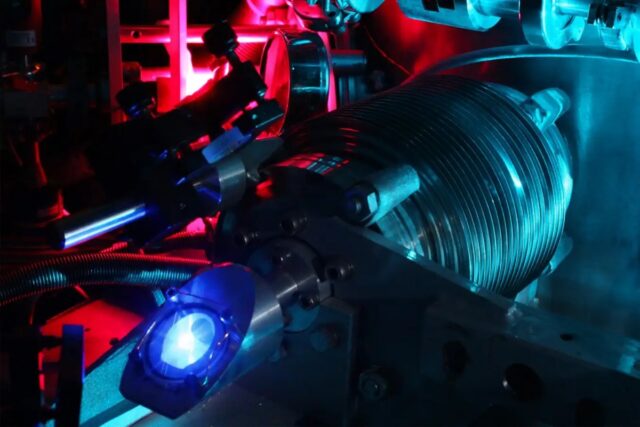
Most recently, two studies used advanced techniques in vacuum chambers with lasers to examine hydrogen atoms. These studies confirmed that the proton has a radius of about 0.84 femtometers, consistent with the original 2010 measurement. As physicist Juan Rojo noted, the proton radius should be a universal property, and these papers provide different methods to reach the same conclusion.