Wednesday, April 15, 2026

Physicists Claim Solution to Proton Size Puzzle

Subsequent measurements by various research teams have produced mixed results regarding the size of the proton. In 2013, an international team confirmed their earlier 2010 measurement, concluding that the proton’s radius is 0.84 femtometers, a discrepancy of 7 sigma. Later, in 2016, another experiment replaced the electron with a muon in a deuterium atom—an isotope containing a neutron. This aimed to observe how the presence of a neutron might change the perception of the proton’s charge, and results aligned with the 2010 finding.

However, experiments using regular hydrogen yielded contradictory outcomes. A 2017 study reaffirmed the 2010 measurement, while a 2018 study indicated a larger value that contradicted it. In 2019, scientists from York University conducted an electron-based measurement, seeking to reconcile these differences, and found a proton radius of 0.833 femtometers, consistent with the earlier smaller value.

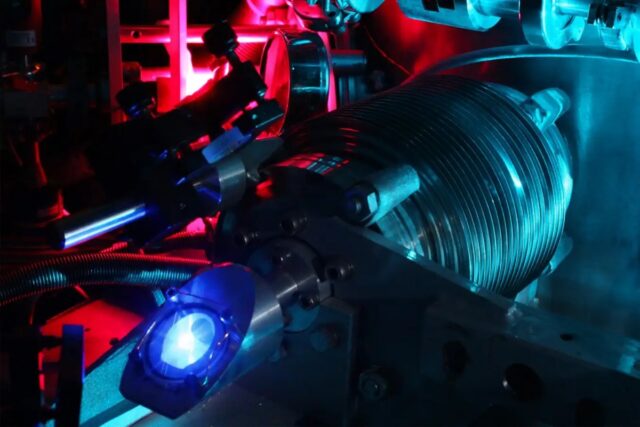
The latest research involved measurements of hydrogen atoms in a vacuum chamber, where lasers controlled the electrons and tracked energy transitions. These observations suggested that the proton’s radius is approximately 0.84 femtometers, reaffirming the 2010 findings that started this debate.

Juan Rojo, a physicist at Vrije University Amsterdam who was not involved in the studies, commented that the proton radius should be a consistent value across different methods of measurement. He noted that the recent papers offer diverse methods arriving at the same conclusion, contributing valuable insights to an ongoing scientific discussion.

Test Your Understanding

Start Quiz

Vocabulary List:
6 words · tap to reveal
ON

Accent

discrepancy/dɪˈskrepənsi/noun
a difference between two results or facts

isotope/ˈaɪsəˌtoʊp/noun
a type of atom with a different neutron number

muon/ˈmjuːɑn/noun
a small particle like an electron but heavier

reconcile/ˈrɛkənsaɪl/verb
to make different ideas or results agree

vacuum/ˈvækjuəm/noun
a space with almost no air or matter

transitions/trænˈzɪʃənz/noun
changes from one state or level to another

How much do you know?

What was the proton's radius confirmed to be by the international team in 2013?
0.77 femtometers
0.82 femtometers
0.84 femtometers
0.90 femtometers
In which year did the experiment involving a muon take place?
2010
2013
2016
2018
What did the 2018 study indicate about the proton's radius?
A smaller value
The same value
A larger value
An inconsistent value
Which university's scientists conducted the electron-based measurement in 2019?
Harvard University
Stanford University
York University
MIT
What method was used in the latest research to measure the proton's radius?
X-rays
Laser control of electrons
Magnetic resonance
Neutron scattering
Which physicist commented on the consistency of the proton radius measurements?
Albert Einstein
Niels Bohr
Juan Rojo
Richard Feynman
The proton's radius was consistently measured to be 0.84 femtometers across all studies.
The 2017 study confirmed the measurement made in 2010.
A deuterium atom contains two protons.
Mixed results have been observed regarding the size of the proton.
Lasers were used to control electrons in the vacuum chamber during the latest research.
Juan Rojo was involved in the studies discussed in the research.
The proton's radius was first confirmed to be 0.84 femtometers in 2013.
The 2018 study indicated a value that contradicted earlier findings.
In a deuterium atom, there is one neutron and one present.
The 2019 measurement found a proton radius of femtometers.
The recent research helped confirm the 2010 findings that started this .
Juan Rojo stated that the proton radius should be a consistent value across different methods of .
This question is required

Test Your Understanding

Start Quiz
Vocabulary List:
6 words · tap to reveal
ON
Accent
discrepancy/dɪˈskrepənsi/noun
a difference between two results or facts
isotope/ˈaɪsəˌtoʊp/noun
a type of atom with a different neutron number
muon/ˈmjuːɑn/noun
a small particle like an electron but heavier
reconcile/ˈrɛkənsaɪl/verb
to make different ideas or results agree
vacuum/ˈvækjuəm/noun
a space with almost no air or matter
transitions/trænˈzɪʃənz/noun
changes from one state or level to another

How much do you know?

What was the proton's radius confirmed to be by the international team in 2013?
0.77 femtometers
0.82 femtometers
0.84 femtometers
0.90 femtometers
In which year did the experiment involving a muon take place?
2010
2013
2016
2018
What did the 2018 study indicate about the proton's radius?
A smaller value
The same value
A larger value
An inconsistent value
Which university's scientists conducted the electron-based measurement in 2019?
Harvard University
Stanford University
York University
MIT
What method was used in the latest research to measure the proton's radius?
X-rays
Laser control of electrons
Magnetic resonance
Neutron scattering
Which physicist commented on the consistency of the proton radius measurements?
Albert Einstein
Niels Bohr
Juan Rojo
Richard Feynman
The proton's radius was consistently measured to be 0.84 femtometers across all studies.
The 2017 study confirmed the measurement made in 2010.
A deuterium atom contains two protons.
Mixed results have been observed regarding the size of the proton.
Lasers were used to control electrons in the vacuum chamber during the latest research.
Juan Rojo was involved in the studies discussed in the research.
The proton's radius was first confirmed to be 0.84 femtometers in 2013.
The 2018 study indicated a value that contradicted earlier findings.
In a deuterium atom, there is one neutron and one present.
The 2019 measurement found a proton radius of femtometers.
The recent research helped confirm the 2010 findings that started this .
Juan Rojo stated that the proton radius should be a consistent value across different methods of .
This question is required

Read More