Monday, April 20, 2026

Ancient 2,000-Year-Old Anchor Discovered in North Sea

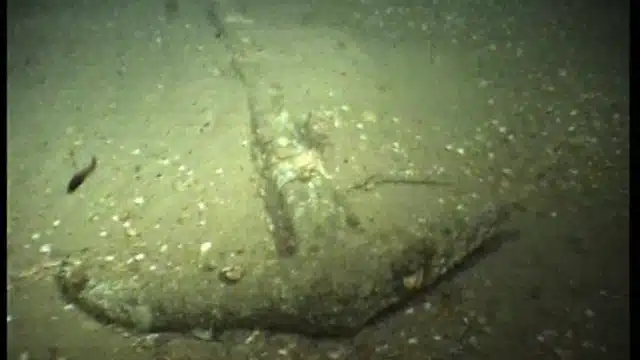
A 2,000-year-old anchor has been discovered beneath the North Sea, revealing an extraordinary piece of history. This find occurred off the coast of the UK during a seabed survey, and it is significant because it has survived longer than most similar objects, hidden under layers of sand that protected it from ocean currents and oxygen, which typically cause decay.

The anchor, made from wood and iron, is remarkably preserved. Generally, wood deteriorates quickly when submerged, but thick sand and low oxygen levels contributed to its exceptional condition. Maritime archaeologist Brandon Mason stated that if the anchor dates back nearly 2,000 years, it would be historically significant, as only three pre-Viking anchors are known to exist in northern European waters outside the Mediterranean.

This anchor likely belonged to a trading ship, as vessels in the area transported goods like metal and pottery across the North Sea. This indicates that ancient sea routes were busy long before modern shipping began. Mason noted that this discovery provides strong evidence of significant maritime activity during Roman times.

The anchor was located using sonar scanning, a modern technology that identifies buried objects. Stuart Churchley, from Historic England, highlighted that this discovery shows the thorough investigation of the North Sea’s seafloor is unprecedented. After its retrieval, the anchor will be studied further, indicating that there is still much to learn from the ocean’s depths.

Test Your Understanding

Start Quiz

Vocabulary List:
6 words · tap to reveal
ON

Accent

seabed/ˈsiːˌbɛd/noun
the bottom of the sea or ocean

survey/ˈsɜrveɪ/noun
a careful check or study of an area

deteriorates/dɪˈtɪriəˌreɪts/verb
becomes worse or weaker over time

submerged/səbˈmɝdʒd/verb
covered or placed completely under water

maritime/ˈmærɪˌtaɪm/adjective
connected with ships, sea travel, and shipping

sonar/ˈsoʊnɑr/noun
technology using sound to find objects underwater

How much do you know?

How old is the discovered anchor?
1,000 years
2,000 years
3,000 years
500 years
What does the anchor reveal about ancient sea routes?
They were inactive
They were busy
They were newly established
They were dangerous
What material is the anchor made from?
Only wood
Only iron
Wood and iron
Gold and silver
Who is the maritime archaeologist mentioned in the text?
Stuart Churchley
Brandon Mason
Historic England
Unknown
What technology was used to locate the anchor?
Radar
Sonar scanning
Drones
Magnetic fields
How many pre-Viking anchors are known to exist in northern European waters?
One
Two
Three
Four
The anchor is believed to have been found in the Mediterranean Sea.
The anchor's preservation is attributed to being buried under sand.
The anchor was discovered during a historical excavation.
There is still much to learn from the ocean's depths according to the text.
Stuart Churchley is an archaeologist from Historic England.
The anchor indicates that trading ships operated in the area.
The anchor is approximately years old.
The anchor was discovered off the coast of the .
The preservation of the anchor is due to low levels.
Modern technology used to locate the anchor is called scanning.
The anchor likely belonged to a ship.
Brandon Mason stated that this find provides evidence of significant maritime during Roman times.
This question is required

Test Your Understanding

Start Quiz
Vocabulary List:
6 words · tap to reveal
ON
Accent
seabed/ˈsiːˌbɛd/noun
the bottom of the sea or ocean
survey/ˈsɜrveɪ/noun
a careful check or study of an area
deteriorates/dɪˈtɪriəˌreɪts/verb
becomes worse or weaker over time
submerged/səbˈmɝdʒd/verb
covered or placed completely under water
maritime/ˈmærɪˌtaɪm/adjective
connected with ships, sea travel, and shipping
sonar/ˈsoʊnɑr/noun
technology using sound to find objects underwater

How much do you know?

How old is the discovered anchor?
1,000 years
2,000 years
3,000 years
500 years
What does the anchor reveal about ancient sea routes?
They were inactive
They were busy
They were newly established
They were dangerous
What material is the anchor made from?
Only wood
Only iron
Wood and iron
Gold and silver
Who is the maritime archaeologist mentioned in the text?
Stuart Churchley
Brandon Mason
Historic England
Unknown
What technology was used to locate the anchor?
Radar
Sonar scanning
Drones
Magnetic fields
How many pre-Viking anchors are known to exist in northern European waters?
One
Two
Three
Four
The anchor is believed to have been found in the Mediterranean Sea.
The anchor's preservation is attributed to being buried under sand.
The anchor was discovered during a historical excavation.
There is still much to learn from the ocean's depths according to the text.
Stuart Churchley is an archaeologist from Historic England.
The anchor indicates that trading ships operated in the area.
The anchor is approximately years old.
The anchor was discovered off the coast of the .
The preservation of the anchor is due to low levels.
Modern technology used to locate the anchor is called scanning.
The anchor likely belonged to a ship.
Brandon Mason stated that this find provides evidence of significant maritime during Roman times.
This question is required

Read More