Thursday, May 21, 2026

NASA’s Psyche Spacecraft Reveals New Images of Familiar World

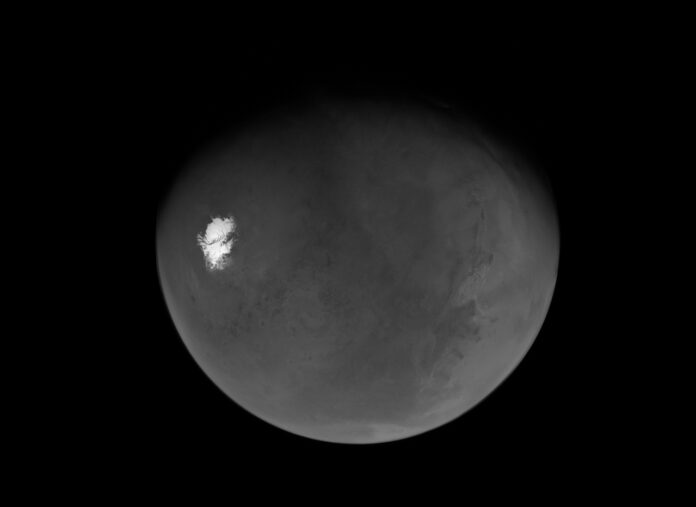
NASA’s Psyche spacecraft recently approached Mars, capturing images from a unique angle. The spacecraft passed Mars from the side opposite the Sun, making the planet look like a thin crescent. This view highlighted Mars’ delicate atmosphere, showing sunlight filtering through dust clouds above its reddish surface.

During this close encounter on May 15, 2026, Psyche took a wide-angle view of Mars’ southern polar ice cap. Jim Bell, the leader of the Psyche imaging team at Arizona State University, reported that the spacecraft recorded thousands of images. These images help scientists check how well the cameras are working.

Psyche’s instruments possibly detected the solar wind interacting with Mars’ upper atmosphere. The spacecraft’s spectrometers aimed to measure the chemical makeup of the Martian surface during its flight.

Many other missions are studying Mars, so major discoveries from Psyche’s data are unlikely. Instead, scientists will use these observations to improve the mission’s instruments by comparing them with data from previous Mars missions.

While it’s fascinating to see Mars from a new angle, the Psyche mission will really shine when it reaches its namesake asteroid in three years. This asteroid, rich in metals like iron and nickel, is about the size of Massachusetts. The spacecraft will have plenty of time to explore this uncharted territory, unlike the brief visit to Mars.


Test Your Understanding

Start Quiz

Vocabulary List:
6 words · tap to reveal
ON

Accent

atmosphere/ˈætməsfɪr/noun
thin layer of gases around a planet

crescent/ˈkrɛsənt/noun
curved thin shape like a moon

spectrometers/spɛkˈtrɑmɪtərz/noun
instruments that measure light to find chemicals

interacting/ˌɪntərˈæktɪŋ/verb
acting on each other; affecting one another

namesake/ˈneɪmseɪk/noun
the person or thing giving a name

uncharted/ʌnˈtʃɑrtɪd/adjective
not mapped, explored, or known before

How much do you know?

What unique angle did NASA's Psyche spacecraft use to capture images of Mars?
From the side opposite the Sun
From the North Pole
From the South Pole
Directly facing the Sun
On what date did Psyche approach Mars?
May 15, 2026
June 20, 2025
April 10, 2027
August 12, 2026
Who is the leader of the Psyche imaging team at Arizona State University?
Jim Bell
John Doe
Alice Smith
Maria Garcia
What did Psyche's instruments possibly detect during its encounter with Mars?
Radio waves
Solar wind
Cosmic rays
Magnetic fields
What is the primary goal of Psyche's observations of Mars?
To make major discoveries
To improve mission instruments
To search for life
To map the surface
What is the size comparison used for Psyche's namesake asteroid?
About the size of Texas
About the size of California
About the size of Massachusetts
About the size of Florida
The Psyche spacecraft captured images of Mars from the side closest to the Sun.
Jim Bell reported that the spacecraft captured thousands of images during its flyby.
Psyche is expected to make significant discoveries about Mars.
The asteroid Psyche is rich in metals like iron and nickel.
Psyche's mission will have a short duration compared to its visit to Mars.
Psyche's instruments are designed to measure the chemical makeup of the Martian surface.
During its close encounter on May 15, 2026, Psyche took a wide-angle view of Mars’ southern polar ice cap and recorded images.
Mars looked like a thin crescent due to Psyche’s approach from the side opposite the and the delicate atmosphere.
Many missions are studying Mars, so major discoveries from Psyche’s data are unlikely.
Psyche's instruments possibly detected the solar wind interacting with Mars’ atmosphere.
The asteroid Psyche is about the size of and is rich in metals.
The spacecraft will explore uncharted territory for time unlike the brief visit to Mars.
This question is required

Test Your Understanding

Start Quiz
Vocabulary List:
6 words · tap to reveal
ON
Accent
atmosphere/ˈætməsfɪr/noun
thin layer of gases around a planet
crescent/ˈkrɛsənt/noun
curved thin shape like a moon
spectrometers/spɛkˈtrɑmɪtərz/noun
instruments that measure light to find chemicals
interacting/ˌɪntərˈæktɪŋ/verb
acting on each other; affecting one another
namesake/ˈneɪmseɪk/noun
the person or thing giving a name
uncharted/ʌnˈtʃɑrtɪd/adjective
not mapped, explored, or known before

How much do you know?

What unique angle did NASA's Psyche spacecraft use to capture images of Mars?
From the side opposite the Sun
From the North Pole
From the South Pole
Directly facing the Sun
On what date did Psyche approach Mars?
May 15, 2026
June 20, 2025
April 10, 2027
August 12, 2026
Who is the leader of the Psyche imaging team at Arizona State University?
Jim Bell
John Doe
Alice Smith
Maria Garcia
What did Psyche's instruments possibly detect during its encounter with Mars?
Radio waves
Solar wind
Cosmic rays
Magnetic fields
What is the primary goal of Psyche's observations of Mars?
To make major discoveries
To improve mission instruments
To search for life
To map the surface
What is the size comparison used for Psyche's namesake asteroid?
About the size of Texas
About the size of California
About the size of Massachusetts
About the size of Florida
The Psyche spacecraft captured images of Mars from the side closest to the Sun.
Jim Bell reported that the spacecraft captured thousands of images during its flyby.
Psyche is expected to make significant discoveries about Mars.
The asteroid Psyche is rich in metals like iron and nickel.
Psyche's mission will have a short duration compared to its visit to Mars.
Psyche's instruments are designed to measure the chemical makeup of the Martian surface.
During its close encounter on May 15, 2026, Psyche took a wide-angle view of Mars’ southern polar ice cap and recorded images.
Mars looked like a thin crescent due to Psyche’s approach from the side opposite the and the delicate atmosphere.
Many missions are studying Mars, so major discoveries from Psyche’s data are unlikely.
Psyche's instruments possibly detected the solar wind interacting with Mars’ atmosphere.
The asteroid Psyche is about the size of and is rich in metals.
The spacecraft will explore uncharted territory for time unlike the brief visit to Mars.
This question is required

Read More