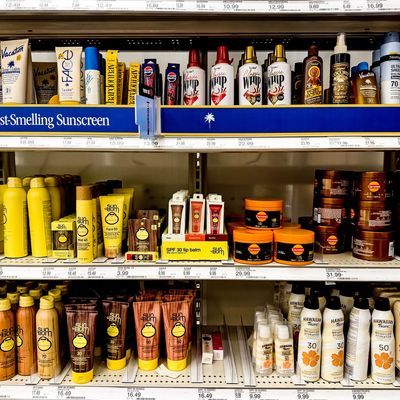
Sunscreens in the United States are poised for significant improvement following the Food and Drug Administration’s (FDA) recent approval of bemotrizinol, a new ingredient. This marks the first addition to the list of permitted sunscreen components in over 25 years, highlighting a potential shift in the availability of advanced sun protection products in the country.
The FDA has confirmed that bemotrizinol functions as a chemical ultraviolet (UV) filter, effectively shielding the skin from both UVA and UVB rays. Moreover, this ingredient exhibits minimal absorption into the body, which enhances its safety profile. While many countries have used bemotrizinol for decades, the stringent regulatory environment in the U.S. has delayed its approval, making this milestone noteworthy in updating sunscreen formulations.
Experts express cautious optimism regarding the FDA’s decision. Carl D’Ruiz, senior manager of advocacy at the ingredient manufacturer dsm-firmenich, described the approval as a significant step forward that could spur innovation in sunscreen technology. D’Ruiz emphasised that the approval not only raises regulatory standards but also paves the way for a new era of products that offer effective and lightweight sun protection. He asserted that bemotrizinol provides reliable broad-spectrum protection, which is essential for combatting skin cancer and premature ageing.
Several well-known sunscreen brands, including Bioré and La Roche-Posay, already incorporate bemotrizinol into their formulations. However, the FDA’s clearance does not guarantee immediate availability of these products in the U.S. Experts like aesthetician Charlotte Palermino have pointed out that numerous other effective filters remain unapproved in the United States. Thus, the success of bemotrizinol may encourage the approval of additional ingredients in the near future.
Test Your Understanding
How much do you know?