Dementia remains a challenging condition with no effective treatment, impacting millions globally. Researchers have now pinpointed a potential path for future therapies by identifying a new molecular target. In mice, this discovery has helped slow down dementia progression.
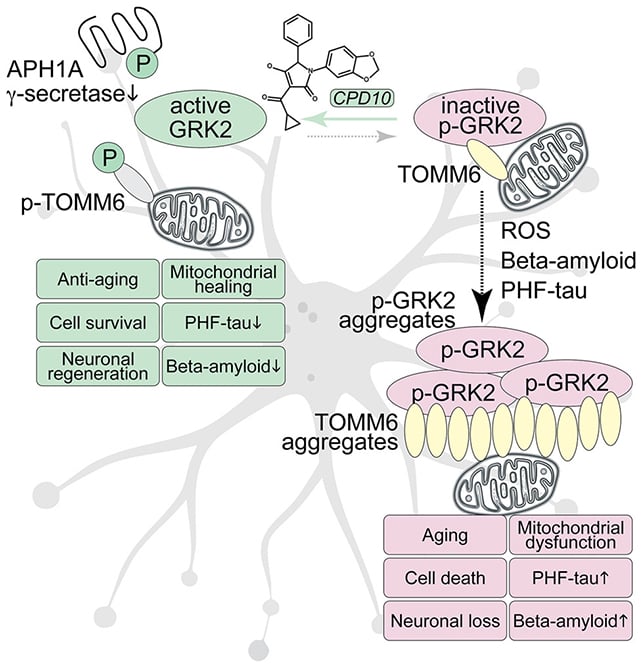
The focus is on an enzyme called G protein-coupled receptor kinase 2 (GRK2), essential for cell health. GRK2 aids cells in handling stress, but an altered, inactive form of it also exists. This inactive version accumulates around mitochondria, the energy centres in cells, which are linked to Alzheimer’s disease.
Scientists, including a team from ETH Zurich in Switzerland, found evidence connecting GRK2 to dementia. Through studies in both mouse models of Alzheimer’s and human brain samples, they noticed a high presence of the inactive GRK2 form. This version promotes the production of amyloid-beta, a protein associated with Alzheimer’s.
Further research showed GRK2 clumps together similarly to amyloid-beta, impairing mitochondria and creating stress within cells. This stress cycle leads to more inactive GRK2, worsening the condition.
Encouragingly, scientists developed a chemical called Compound 10. In lab tests on mice and human cells, this compound prevented GRK2 from clumping, improving mitochondrial function and reducing amyloid-beta levels. The compound slowed dementia progression and showed potential anti-aging effects.
Although more research is necessary, especially involving human brain samples, these findings offer hope. GRK2 hasn’t been studied in depth for Alzheimer’s before, and addressing various factors might be vital for future cures. Identifying GRK2 as a target and Compound 10 as a treatment mechanism opens new avenues in Alzheimer’s research.
The study is published in Cell Reports Medicine.
Test Your Understanding
How much do you know?