Saturday, June 20, 2026

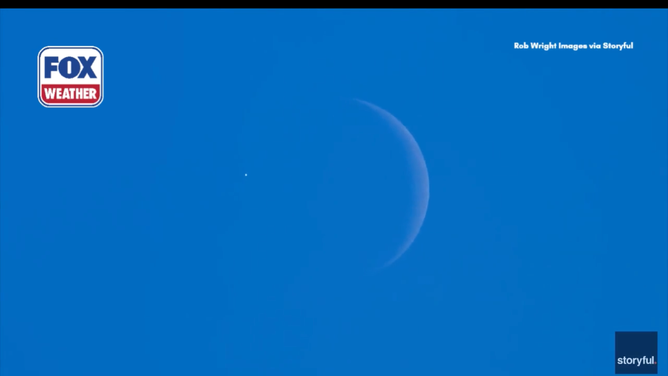
Daytime Lunar Occultation Captured in Stunning Timelapse

A rare daytime lunar occultation happened on June 17, as Venus briefly vanished behind the moon. This event was visible in many areas of North America, including the United States, southern Canada, northern Mexico, and parts of the Caribbean and South America.

During the occultation, which occurs when the moon passes directly between Earth and a celestial object, Venus was temporarily obscured from view. A stunning timelapse video captured the moment when Venus disappeared behind the dark side of the crescent moon, only to reappear soon after.

This unusual event took place during daylight, giving many people a unique chance to see it. Observers often watch such occurrences at night, making this daytime event special. Video footage shows the small glint of Venus fading as it moved behind the moon’s shadow.

Lunar occultations occur regularly in the sky, but it is less common for the moon to completely cover bright planets like Venus, Mars, Jupiter, or Saturn. The moon travels eastward across the sky at about 2,300 mph relative to stars, allowing it to sometimes pass in front of these planets.

Even though Venus is about 240 times farther from Earth than the moon, its smaller size in the sky means the moon can easily hide it during an occultation.


Test Your Understanding

Start Quiz

Vocabulary List:
6 words · tap to reveal
ON

Accent

occultation/ˌɑkəlˈteɪʃən/noun
when one object hides another from view

lunar/ˈluːnɚ/adjective
related to the moon or its appearance

celestial/səˈlɛstʃəl/adjective
belonging to the sky or outer space

obscured/əbˈskjʊrd/verb
made hard to see or hidden from sight

timelapse/ˈtaɪmˌlæps/noun
a fast video showing slow events quickly

glint/ɡlɪnt/noun
a small bright flash of light

How much do you know?

On what date did the rare daytime lunar occultation occur?
June 17
July 1
June 21
June 30
Which celestial object briefly vanished behind the moon during the occultation?
Mars
Jupiter
Venus
Saturn
Which of the following regions was NOT mentioned as being able to see the lunar occultation?
The United States
Southern Canada
Northern Mexico
Australia
What speed does the moon travel across the sky relative to stars?
1,500 mph
2,300 mph
2,000 mph
3,500 mph
What phenomenon occurs when the moon passes directly between Earth and a celestial object?
Lunar eclipse
Solar eclipse
Lunar occultation
Planetary alignment
Which of the following planets is mentioned as being less likely to be covered by the moon during an occultation?
Mercury
Mars
Earth
Venus
A daytime lunar occultation is a common event that often happens.
Observers usually watch lunar occultations at night.
Venus is closer to Earth than the moon during a lunar occultation.
Video footage was captured of Venus disappearing behind the crescent moon.
The moon can completely cover Jupiter during lunar occultations.
The lunar occultation took place on June 17 under nighttime conditions.
During the occultation, Venus was temporarily obscured from view by the of the crescent moon.
This rare astronomical event occurred on 17.
Lunar occultations are less common for the moon to cover bright planets like Venus, , Jupiter, or Saturn.
The moon travels eastward across the sky at about mph.
Many observers were able to see the unique daytime lunar occultation in America.
Despite being farther from Earth, Venus's size allows the moon to hide it during an occultation.
This question is required

Test Your Understanding

Start Quiz
Vocabulary List:
6 words · tap to reveal
ON
Accent
occultation/ˌɑkəlˈteɪʃən/noun
when one object hides another from view
lunar/ˈluːnɚ/adjective
related to the moon or its appearance
celestial/səˈlɛstʃəl/adjective
belonging to the sky or outer space
obscured/əbˈskjʊrd/verb
made hard to see or hidden from sight
timelapse/ˈtaɪmˌlæps/noun
a fast video showing slow events quickly
glint/ɡlɪnt/noun
a small bright flash of light

How much do you know?

On what date did the rare daytime lunar occultation occur?
June 17
July 1
June 21
June 30
Which celestial object briefly vanished behind the moon during the occultation?
Mars
Jupiter
Venus
Saturn
Which of the following regions was NOT mentioned as being able to see the lunar occultation?
The United States
Southern Canada
Northern Mexico
Australia
What speed does the moon travel across the sky relative to stars?
1,500 mph
2,300 mph
2,000 mph
3,500 mph
What phenomenon occurs when the moon passes directly between Earth and a celestial object?
Lunar eclipse
Solar eclipse
Lunar occultation
Planetary alignment
Which of the following planets is mentioned as being less likely to be covered by the moon during an occultation?
Mercury
Mars
Earth
Venus
A daytime lunar occultation is a common event that often happens.
Observers usually watch lunar occultations at night.
Venus is closer to Earth than the moon during a lunar occultation.
Video footage was captured of Venus disappearing behind the crescent moon.
The moon can completely cover Jupiter during lunar occultations.
The lunar occultation took place on June 17 under nighttime conditions.
During the occultation, Venus was temporarily obscured from view by the of the crescent moon.
This rare astronomical event occurred on 17.
Lunar occultations are less common for the moon to cover bright planets like Venus, , Jupiter, or Saturn.
The moon travels eastward across the sky at about mph.
Many observers were able to see the unique daytime lunar occultation in America.
Despite being farther from Earth, Venus's size allows the moon to hide it during an occultation.
This question is required

Read More