Monday, July 6, 2026

Experts Develop New Defence Against Solar Storms

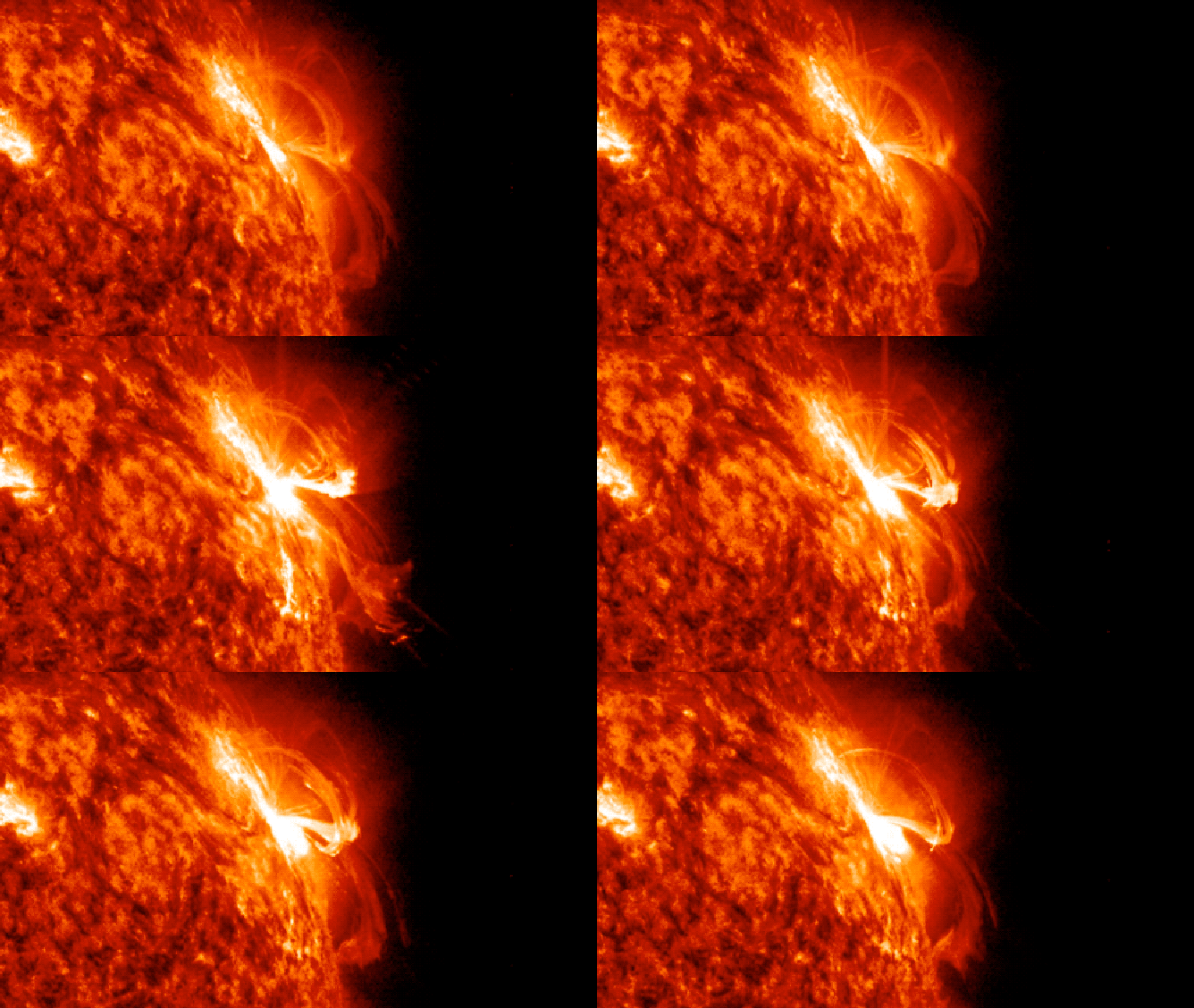
NASA’s Solar Dynamics Observatory recorded a powerful solar flare on 3 February. This flare, part of several recent eruptions, may cause geomagnetic storms, which could enhance the visibility of the Northern Lights.

Experts from the American Geophysical Union (AGU) are studying solar storms to understand their effects better. Solar storms occur when the Sun generates complex magnetic fields. This can result in solar flares, which are bursts of energy that can disrupt communication systems, power grids, and navigation signals on Earth. They also pose risks to satellites and astronauts, according to NASA.

These geomagnetic storms can have serious implications for technology both in space and on Earth. AGU researchers propose a new method to minimise the impact of solar storms by establishing an artificial mass-loading system in Earth’s magnetosphere. This involves sending multiple spacecraft into orbit, each containing material designed to buffer against solar storms.

When released, this material would interact with solar particles, reducing the impact of events like coronal mass ejections—large expulsions of plasma from the sun. The technique could cut the harmful effects of solar storms by 50% or more.

Once this system is operational, it could offer immediate protection for satellites and other technologies during solar events. This advancement may significantly enhance our ability to safeguard technology and improve safety measures as we explore space further. Further testing and simulations will be necessary to realise this potential.


Test Your Understanding

Start Quiz

Vocabulary List:
6 words · tap to reveal
ON

Accent

geomagnetic/ˌdʒiː.oʊˈmæɡnɛtɪk/adjective
connected to Earth's magnet and its changes

magnetosphere/ˌmæɡnəˈsfɪr/noun
the area around Earth controlled by its magnet

coronal/kəˈroʊnəl/adjective
relating to the Sun's outer layer

ejections/ɪˈdʒɛkʃənz/noun
things thrown out from the Sun

minimise/ˈmɪnəˌmaɪz/verb
make something smaller or less harmful

buffer/ˈbʌfər/verb
protect something by reducing the force of harm

How much do you know?

What did NASA's Solar Dynamics Observatory record on 3 February?
A meteor shower
A powerful solar flare
An earthquake
A satellite launch
Which organization is studying solar storms for better understanding?
NASA
European Space Agency
American Geophysical Union
World Meteorological Organization
What can solar flares disrupt?
Plant growth
Communication systems
Weather patterns
Animal migration
What is proposed to minimize the impact of solar storms?
Ground-based shields
Artificial mass-loading system
Solar panel upgrades
Underground bunkers
What is one of the risks posed by solar storms?
Increased rainfall
Disruption of navigation signals
Extended daylight hours
Enhanced internet speed
How much could the proposed technique reduce the harmful effects of solar storms?
10%
25%
50%
100%
Geomagnetic storms enhance the visibility of the Northern Lights.
Solar storms are harmless to satellites and astronauts.
The artificial mass-loading system involves sending multiple spacecraft into orbit.
Coronal mass ejections are small bursts of energy from the sun.
NASA has found a way to eliminate the effects of solar storms completely.
Further testing and simulations are necessary to realize the potential of the proposed system.
The powerful solar flare recorded on 3 February may cause geomagnetic storms, which could enhance the visibility of .
Solar storms occur when the Sun generates complex fields.
AGU researchers propose a new method to minimize the impact of solar storms by establishing an artificial mass-loading system in Earth's .
The technique could cut the harmful effects of solar storms by or more.
This advancement may significantly enhance our ability to safeguard technology as we explore space .
Once the system is operational, it could offer immediate protection for satellites during solar .
This question is required

Test Your Understanding

Start Quiz
Vocabulary List:
6 words · tap to reveal
ON
Accent
geomagnetic/ˌdʒiː.oʊˈmæɡnɛtɪk/adjective
connected to Earth's magnet and its changes
magnetosphere/ˌmæɡnəˈsfɪr/noun
the area around Earth controlled by its magnet
coronal/kəˈroʊnəl/adjective
relating to the Sun's outer layer
ejections/ɪˈdʒɛkʃənz/noun
things thrown out from the Sun
minimise/ˈmɪnəˌmaɪz/verb
make something smaller or less harmful
buffer/ˈbʌfər/verb
protect something by reducing the force of harm

How much do you know?

What did NASA's Solar Dynamics Observatory record on 3 February?
A meteor shower
A powerful solar flare
An earthquake
A satellite launch
Which organization is studying solar storms for better understanding?
NASA
European Space Agency
American Geophysical Union
World Meteorological Organization
What can solar flares disrupt?
Plant growth
Communication systems
Weather patterns
Animal migration
What is proposed to minimize the impact of solar storms?
Ground-based shields
Artificial mass-loading system
Solar panel upgrades
Underground bunkers
What is one of the risks posed by solar storms?
Increased rainfall
Disruption of navigation signals
Extended daylight hours
Enhanced internet speed
How much could the proposed technique reduce the harmful effects of solar storms?
10%
25%
50%
100%
Geomagnetic storms enhance the visibility of the Northern Lights.
Solar storms are harmless to satellites and astronauts.
The artificial mass-loading system involves sending multiple spacecraft into orbit.
Coronal mass ejections are small bursts of energy from the sun.
NASA has found a way to eliminate the effects of solar storms completely.
Further testing and simulations are necessary to realize the potential of the proposed system.
The powerful solar flare recorded on 3 February may cause geomagnetic storms, which could enhance the visibility of .
Solar storms occur when the Sun generates complex fields.
AGU researchers propose a new method to minimize the impact of solar storms by establishing an artificial mass-loading system in Earth's .
The technique could cut the harmful effects of solar storms by or more.
This advancement may significantly enhance our ability to safeguard technology as we explore space .
Once the system is operational, it could offer immediate protection for satellites during solar .
This question is required

Read More