Friday, July 17, 2026

NASA’s Curiosity Rover Discovers Unexplained Honeycomb Pattern on Mars

NASA’s Curiosity rover took a photo of a strange honeycomb pattern on Mars. This happened after 14 years of exploring the Red Planet. Scientists are confused about how this pattern formed.

Curiosity found this honeycomb-like texture while exploring Gale Crater. The rover team saw shapes that looked like a giant honeycomb. They also noticed more eroded shapes and dark rocks nearby.

Researchers are not sure where these rocks came from. They may have fallen from higher ground, been pushed by an impact, or come from space. Mission scientists were surprised to see new details when they compared close-up images with pictures taken from above Mars.

It is unclear how this honeycomb shape formed. Mars has had many explosions, water flow, and strong winds over billions of years. These processes could have created the unusual shapes.

Curiosity continues to explore Mars. It will soon look at darker materials that appear rougher. Scientists hope to learn more about the planet’s past and its possible links to life.


Test Your Understanding

Start Quiz

Vocabulary List:
6 words · tap to reveal
ON

Accent

honeycomb/ˈhʌniˌkoʊm/noun
a pattern of many small six-sided shapes

texture/ˈtɛkstʃɚ/noun
how the surface looks or feels

eroded/ɪˈroʊdɪd/adjective
worn away by water, wind, or other forces

impact/ˈɪmpækt/noun
a strong hit or force from a collision

explosions/ɪkˈsploʊʒənz/noun
powerful bursts that break or throw things apart

materials/məˈtɪriəlz/noun
substances or things used to make or study

How much do you know?

What pattern did NASA’s Curiosity rover photograph on Mars?
Honeycomb pattern
Circular pattern
Spiral pattern
Square pattern
How long has the Curiosity rover been exploring Mars?
10 years
14 years
20 years
5 years
Where did Curiosity find the honeycomb-like texture?
Olympus Mons
Valles Marineris
Gale Crater
Hellas Planitia
What did researchers primarily observe near the honeycomb pattern?
Water flow
Eroded shapes and dark rocks
Vegetation
Ice formations
What factors have contributed to the changes on Mars over billions of years?
Human activities
Volcanic eruptions
Explosions, water flow, and strong winds
Meteor showers
What is Curiosity expected to explore next?
Water sources
Darker materials that appear rougher
More honeycomb patterns
Martian vegetation
The Curiosity rover has only been exploring Mars for 10 years.
Scientists have a clear understanding of how the honeycomb pattern formed.
Curiosity found the honeycomb pattern by itself without any prior exploration.
Mars has experienced many natural processes over billions of years.
Researchers are confident that the dark rocks near the honeycomb pattern came from Earth.
The Curiosity rover will soon analyze rough, darker materials on Mars.
NASA’s Curiosity rover took a photo of a strange honeycomb pattern on Mars after years of exploring.
Curiosity found this honeycomb-like texture while exploring Crater.
Researchers are not sure where the dark rocks came from, but they may have fallen from ground.
Mars has had many explosions, water flow, and strong over billions of years.
Curiosity continues to explore Mars to learn more about the planet's past and its possible links to life.
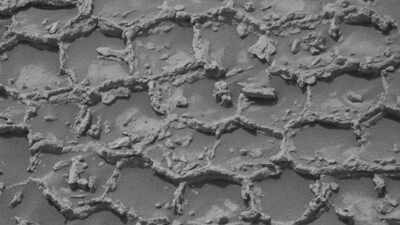
Curiosity saw shapes that looked like a giant while exploring.
This question is required

Test Your Understanding

Start Quiz
Vocabulary List:
6 words · tap to reveal
ON
Accent
honeycomb/ˈhʌniˌkoʊm/noun
a pattern of many small six-sided shapes
texture/ˈtɛkstʃɚ/noun
how the surface looks or feels
eroded/ɪˈroʊdɪd/adjective
worn away by water, wind, or other forces
impact/ˈɪmpækt/noun
a strong hit or force from a collision
explosions/ɪkˈsploʊʒənz/noun
powerful bursts that break or throw things apart
materials/məˈtɪriəlz/noun
substances or things used to make or study

How much do you know?

What pattern did NASA’s Curiosity rover photograph on Mars?
Honeycomb pattern
Circular pattern
Spiral pattern
Square pattern
How long has the Curiosity rover been exploring Mars?
10 years
14 years
20 years
5 years
Where did Curiosity find the honeycomb-like texture?
Olympus Mons
Valles Marineris
Gale Crater
Hellas Planitia
What did researchers primarily observe near the honeycomb pattern?
Water flow
Eroded shapes and dark rocks
Vegetation
Ice formations
What factors have contributed to the changes on Mars over billions of years?
Human activities
Volcanic eruptions
Explosions, water flow, and strong winds
Meteor showers
What is Curiosity expected to explore next?
Water sources
Darker materials that appear rougher
More honeycomb patterns
Martian vegetation
The Curiosity rover has only been exploring Mars for 10 years.
Scientists have a clear understanding of how the honeycomb pattern formed.
Curiosity found the honeycomb pattern by itself without any prior exploration.
Mars has experienced many natural processes over billions of years.
Researchers are confident that the dark rocks near the honeycomb pattern came from Earth.
The Curiosity rover will soon analyze rough, darker materials on Mars.
NASA’s Curiosity rover took a photo of a strange honeycomb pattern on Mars after years of exploring.
Curiosity found this honeycomb-like texture while exploring Crater.
Researchers are not sure where the dark rocks came from, but they may have fallen from ground.
Mars has had many explosions, water flow, and strong over billions of years.
Curiosity continues to explore Mars to learn more about the planet's past and its possible links to life.

Curiosity saw shapes that looked like a giant while exploring.
This question is required

Read More