

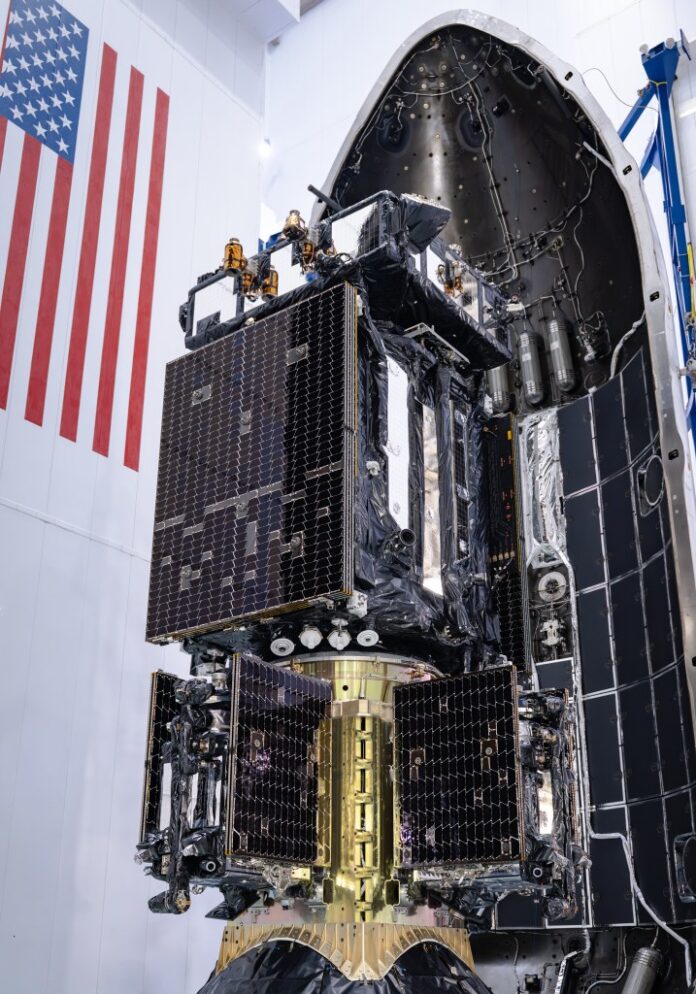
SpaceX launched a Northrop Grumman robotic spacecraft on July 21, aiming to extend the lives of several satellites by installing propulsion modules in geostationary orbit. The Falcon 9 rocket lifted off from Cape Canaveral Space Force Station in Florida at 5:15 p.m. Eastern time, carrying a Mission Robotic Vehicle (MRV) along with three Mission Extension Pods.
The mission requires the full power of the rocket to send the MRV and pods towards geostationary orbit, which is approximately 22,000 miles above Earth. As a result, SpaceX did not attempt to recover the rocket’s first stage, marking the end of its service after 32 launches.
Once in geostationary orbit, the pods will position themselves near the satellites they are designed to service. The MRV will use its robotic arms to attach each pod to a satellite, enabling them to perform multiple servicing missions over an expected lifespan of around 15 years.
The three pods are contracted to commercial satellite operators, including Intelsat and Australia’s Optus. Unlike fuel refuelling, the pods help maintain the satellites’ positions using their own electric thrusters. This allows satellites with low fuel to continue operating, potentially extending their lifespan by approximately six years.
The MRV represents an evolution in satellite servicing, as it builds on previous life-extension missions by Northrop’s SpaceLogistics, which has already completed three dockings successfully. Future plans include launching more Mission Extension Pods while keeping the MRV active in orbit for upcoming tasks.


