Wednesday, June 3, 2026

Bees Found Living Underground in New York Cemetery for Century

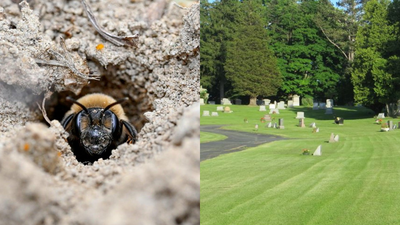
An ordinary cemetery in upstate New York has become the setting for a significant discovery involving pollinators. Researchers from Cornell University have estimated that around 5.5 million mining bees reside beneath East Lawn Cemetery in Ithaca, New York. This aggregation of native bees may have been thriving for over a century, surviving due to undisturbed soil and suitable nesting conditions. This find underscores the importance of protecting lesser-known habitats, which could help conserve vulnerable pollinator populations facing threats from habitat loss, pesticides, and climate change.

The focus of this discovery is the regular mining bee (Andrena regularis), a native species that makes underground nests. While estimates suggest a population range between 3 million and 8 million bees, 5.5 million is the average figure. The bees occupy approximately 1.5 acres beneath the cemetery, possibly creating one of the largest known groupings of ground-nesting bees.

Researchers first noted an unusual number of bees emerging each spring, leading them to investigate further and uncover a remarkable concentration of nests hidden beneath the surface. Unlike honeybees, mining bees are solitary; each female maintains her own nest, laying eggs and storing pollen for her young.

The cemetery’s conditions, such as well-drained soil and limited disturbances, have likely allowed these bees to thrive for generations. The significance of this finding extends beyond the cemetery, highlighting the essential role of native bees in pollinating plants and crops. As concerns grow about declining pollinator numbers, the need to understand and protect these insects is increasingly pressing.

The cemetery aids local agriculture as it is near Cornell Orchards, where the timing of mining bees’ emergence coincides with the blooming of fruit trees, contributing to pollination. Despite their current health, ground-nesting bees are under threat across North America from habitat destruction and pesticide use. Solitary bees cannot be relocated like honeybees, making the preservation of their habitats crucial.

This discovery serves as a reminder that ecological surprises can be found in familiar places. Researchers plan to continue their study of the aggregation to gain insights into the bees’ nesting behaviours and habitat needs, which could inform conservation efforts across North America.

Test Your Understanding

Start Quiz

How much do you know?

Where is East Lawn Cemetery located?
Ithaca, New York
Albany, New York
Buffalo, New York
Rochester, New York
What is the estimated population of mining bees beneath the cemetery?
1 million
3 million
5.5 million
10 million
What type of bee has been discovered in the cemetery?
Honeybee
Mining bee
Bumblebee
Carpenter bee
What range is estimated for the population of mining bees?
1 million - 2 million
3 million - 8 million
5 million - 10 million
10 million - 15 million
What contributes to the thriving population of bees in the cemetery?
Heavy pesticide use
Undisturbed soil
Urban development
Frequent disturbances
What agricultural location is near the cemetery?
Cornell Farms
Cornell Orchards
Ithaca Vineyards
Finger Lakes Winery
Mining bees are social insects.
The population of mining bees is beneficial for local agriculture.
Mining bees make nests above ground.
The discovery of mining bees underscores the need for habitat protection.
Mining bees can be relocated easily like honeybees.
The cemetery is experiencing high levels of disturbances.
The average population of mining bees is estimated to be around million.
The regular mining bee is also known as Andrena .
Mining bees contribute to the pollination of trees.
Mining bees are solitary and each female has her own .
The bees occupy approximately acres beneath the cemetery.
The cemetery's conditions are favorable due to well-drained soil and limited .
This question is required

Test Your Understanding

Start Quiz

How much do you know?

Where is East Lawn Cemetery located?
Ithaca, New York
Albany, New York
Buffalo, New York
Rochester, New York
What is the estimated population of mining bees beneath the cemetery?
1 million
3 million
5.5 million
10 million
What type of bee has been discovered in the cemetery?
Honeybee
Mining bee
Bumblebee
Carpenter bee
What range is estimated for the population of mining bees?
1 million - 2 million
3 million - 8 million
5 million - 10 million
10 million - 15 million
What contributes to the thriving population of bees in the cemetery?
Heavy pesticide use
Undisturbed soil
Urban development
Frequent disturbances
What agricultural location is near the cemetery?
Cornell Farms
Cornell Orchards
Ithaca Vineyards
Finger Lakes Winery
Mining bees are social insects.
The population of mining bees is beneficial for local agriculture.
Mining bees make nests above ground.
The discovery of mining bees underscores the need for habitat protection.
Mining bees can be relocated easily like honeybees.
The cemetery is experiencing high levels of disturbances.
The average population of mining bees is estimated to be around million.
The regular mining bee is also known as Andrena .
Mining bees contribute to the pollination of trees.
Mining bees are solitary and each female has her own .
The bees occupy approximately acres beneath the cemetery.
The cemetery's conditions are favorable due to well-drained soil and limited .
This question is required

Read More