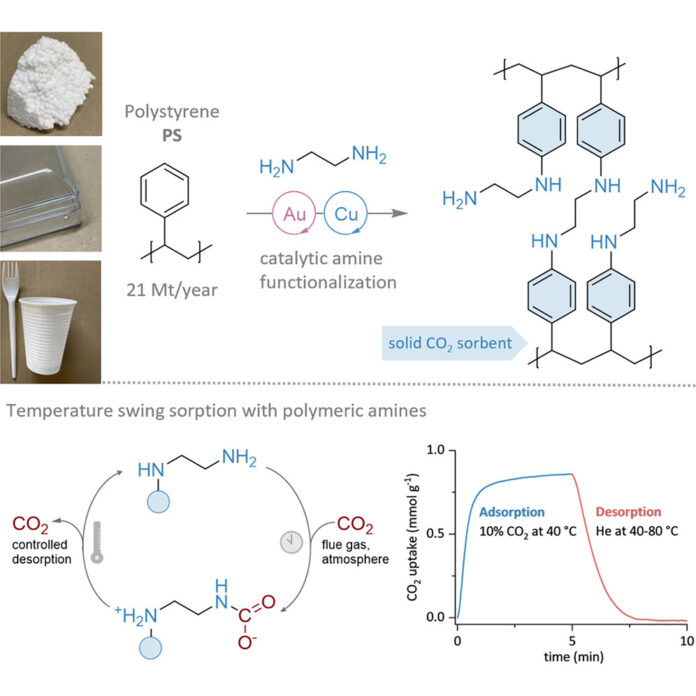
Researchers have developed a new carbon-capture material using discarded plastics, which could help reduce greenhouse gas emissions. This advancement is significant as it addresses both plastic waste and environmental concerns.
The team tested the process on various plastic items, including Styrofoam, food packaging, and Lego. They found that the resulting material effectively captured carbon dioxide (CO?) in both high and low concentrations, such as those found in industrial smokestacks and in the air.
The scientists were also able to adjust the material’s properties by varying the levels of amine groups. These amines are chemical groups that can bond with CO?. They explored using different synthetic materials to create amines, but found that some waste-derived amines performed less effectively in capturing CO? compared to those from polystyrene.
While the styrene-based material was successful, the alternative structures of amines derived from urethane foam and building trim did not perform as well. The researchers noted that, although the newer amines had lower CO? capture capacity, the potential to create carbon-capture materials from waste plastics still exists. This innovation could provide a viable solution for managing landfill plastic while also reducing the carbon footprint of carbon capture processes.
However, experts caution that carbon capture should not be seen as an excuse to continue using fossil fuels. Instead, it serves as an additional measure to tackle rising levels of CO? in the atmosphere, especially if carried out sustainably. Moving forward, the focus will be on optimising the sourcing and processes for creating effective amines.
Test Your Understanding
How much do you know?