

Europe-listed shares witnessed a significant decline on Thursday, 9 October 2025, as anxieties about the intensification of the U.S.-Iran conflict unsettled global markets. The pan-European Stoxx 600 index fell by 1.1% shortly after 12:15 a.m. in London, recovering slightly from even greater losses earlier in the session. Most sectors and major regional stock exchanges remained firmly in negative territory.
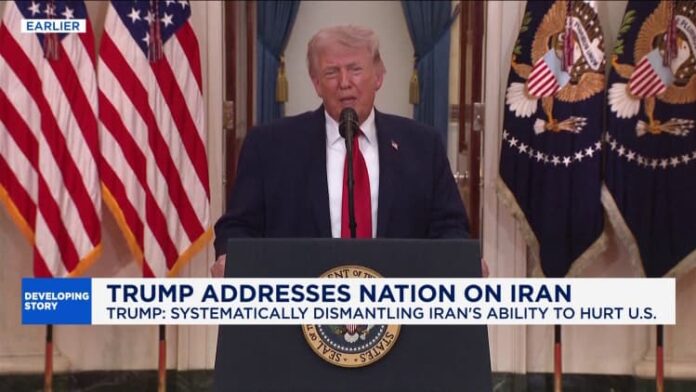
The technology sector faced the steepest losses, with the Stoxx Europe Technology index down by 3.1%, marking its worst performance since 3 February. U.S. President Donald Trump, in a recent address, indicated that he anticipates the conflict to prolong for another two to three weeks, during which U.S. forces will “hit” Iran “extremely hard.”
As Trump’s speech concluded, U.S. stock futures plummeted, reversing gains made during Wall Street’s Wednesday session. Furthermore, data indicated a notably lower opening for New York-listed stocks on Thursday morning. Asian markets also recorded declines as investors processed Trump’s statements.
Oil prices surged following the president’s address, with global benchmark Brent crude rising over 8% to reach $109.10. The escalation in oil prices has been pronounced since the U.S. and Israel initiated strikes on Iran on 28 February, which provoked retaliatory actions throughout the Gulf region. In March alone, Brent crude oil prices escalated by more than 60%, representing the most substantial monthly increase since records began in the 1980s.
On Wednesday, prior to Trump’s address, European stocks had risen after he suggested that the war might conclude within weeks. Investors are also responding to reports that the Trump administration is preparing new tariffs on pharmaceutical companies that have not agreed to ensure low drug prices in the U.S. Additionally, British oil major Shell is reportedly negotiating with the Venezuelan government to develop large offshore natural gas fields. Ryanair’s CEO, Michael O’Leary, cautioned that the U.K. could face jet fuel shortages due to its dependence on supplies from Kuwait amid the ongoing conflict.
Test Your Understanding
How much do you know?