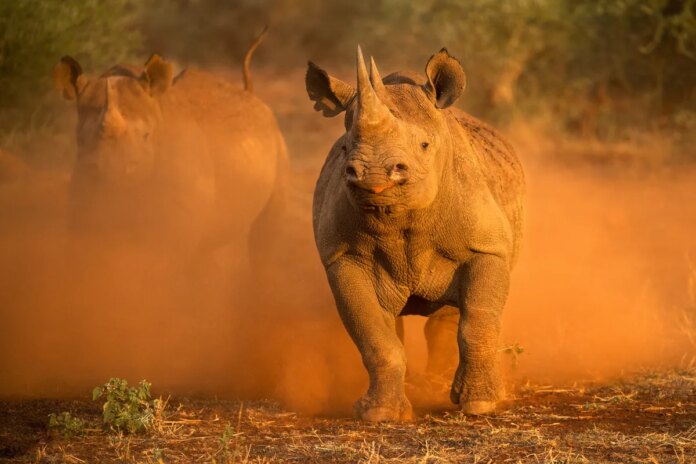
There are five species of rhino still alive today, all characterised by their strong bodies, thick skin, and formidable horns. The largest is the white rhino, which includes northern and southern subspecies. Adult males can weigh up to 3,500 kg, comparable to a motorhome. Even the smallest, the Sumatran rhino, weighs about 1,000 kg, similar to two grand pianos.
Generally, rhinos are calm herbivores, having no natural predators due to their size. They mainly roam around on their three-toed feet, munching on plants. Rhinos are also known for their poor eyesight; they can only see clearly at distances of 15 to 20 metres. This short-sightedness can lead to charging if they are startled by sudden noises or movements.
Despite their bulk, rhinos can run surprisingly fast. Adult white rhinos can achieve speeds up to 40 miles per hour, while black rhinos can reach 35 miles per hour, and Sumatran rhinos can run at 25 miles per hour. However, they can only sustain these speeds for a short distance before becoming tired.
In case one finds themselves facing a charging rhino, advice varies. It’s best to avoid such situations. If not, finding cover behind a large object or running in a zig-zag pattern can help evade them. Staying calm and holding your ground may also work, as many charges are often just bluffs intended to intimidate.
Test Your Understanding
How much do you know?