

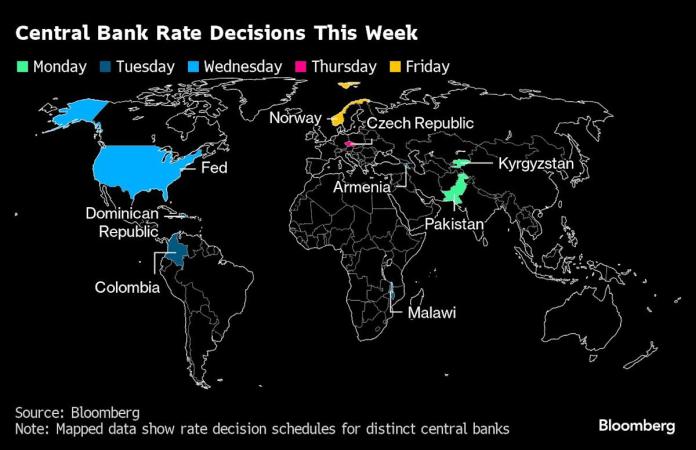
Jerome Powell’s upcoming remarks will be closely scrutinized by investors to determine how long the Federal Reserve will wait before making any decisions on cutting interest rates. In his previous speech, Powell hinted at the possibility of keeping borrowing costs high for a longer period due to stagnation in inflation reduction and the strong labor market. With the latest price data showing persistent underlying inflation and expectations of a robust employment report, it is unlikely that Powell will change his stance.
Following the Fed’s rate decision on Wednesday, where rates are expected to remain high, investors are anticipating at most two rate cuts by the end of the year. The monthly jobs report will provide further insights into the US labor market’s status. Additionally, updates on employment costs, job openings, and manufacturing figures will be released.
Internationally, Canada’s GDP data for February may indicate a slight economic boost, giving the Bank of Canada more options for policy adjustments. In Europe, data on inflation and economic growth are expected to show positive trends. In Asia, China’s manufacturing activity, trade figures from various countries, and Japan’s industrial output data will be closely watched.
Overall, global economic indicators suggest a mixed outlook with varying trends across different regions. Central banks in various countries, including Turkey, Malawi, and Norway, will make monetary policy decisions in line with their respective economic conditions. Latin American countries like Mexico, Brazil, Chile, Peru, and Colombia are also expected to release key economic indicators, influencing their monetary policy decisions.


