Wednesday, April 1, 2026

Scientists Uncover Unexpected Fossils Beneath Antarctic Ice

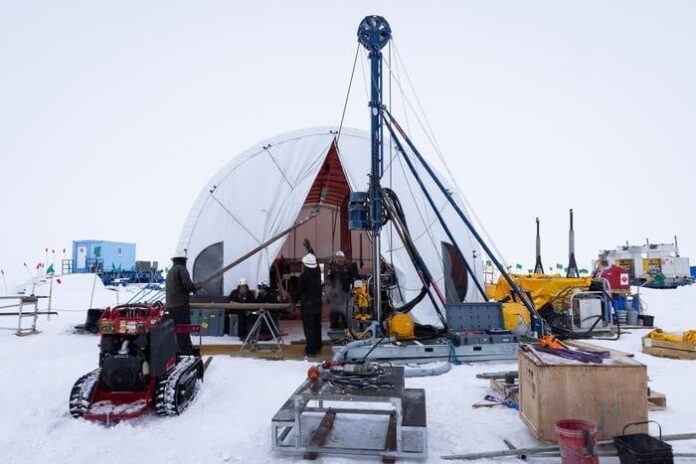
A team of 29 scientists lived in tents on snow in Antarctica for nearly ten weeks. They drilled more than 200 meters into bedrock, deep under ice. The team worked at a remote camp.

They succeeded on their third attempt. They pulled up a 228-meter-long cylinder of mud and rock. This is the deepest sediment core ever taken from an Antarctic ice sheet. The layers inside are surprising scientists. Some were formed when the Earth was much warmer.

To reach the sediment, the team melted a hole through 523 meters of ice. They found different types of sediment. Some was coarse gravel, while other parts contained fine mud with shell pieces. This shows there was once open ocean where there is now thick ice.

The sediment may explain how the West Antarctic Ice Sheet reacts to climate change. The core could provide information about environmental changes over 23 million years. The team will send the core to New Zealand for further study. Scientists aim to learn more about the past ice-sheet conditions and how they affect future sea levels.


Test Your Understanding

Start Quiz

Vocabulary List:
6 words · tap to reveal
ON

Accent

sediment/ˈsɛdəmənt/noun
small pieces of rock, sand, or mud

bedrock/ˈbɛdˌrɑk/noun
solid rock under the soil or ground

drilled/drɪld/verb
made a hole in something with a tool

remote/rɪˈmoʊt/adjective
far away from cities or other people

environmental/ɪnˌvaɪrənˈmɛntəl/adjective
connected to nature and the world around us

climate/ˈklaɪmət/noun
the usual weather in a place over time

How much do you know?

How long did the team of scientists live in Antarctica?
Five weeks
Eight weeks
Ten weeks
Twelve weeks
How many meters did the team drill into the bedrock?
100 meters
200 meters
300 meters
400 meters
What is the length of the sediment core pulled up by the team?
200 meters
218 meters
228 meters
250 meters
How many meters of ice did the team melt to reach the sediment?
423 meters
503 meters
523 meters
600 meters
Where will the sediment core be sent for further study?
Australia
New Zealand
Canada
Argentina
What type of sediment was NOT found by the team?
Coarse gravel
Fine mud with shell pieces
Sand
Ice
The team of scientists worked at a remote camp for nearly three weeks.
The longest sediment core ever taken from an Antarctic ice sheet is 228 meters.
Some layers of the sediment were formed when the Earth was much colder.
The core will provide information about environmental changes over 12 million years.
There was once open ocean where there is now thick ice in Antarctica.
The team made their first attempt successfully on the first try.
The team of scientists lived on snow in Antarctica for nearly weeks.
They drilled more than 200 meters into under ice.
To reach the sediment, the team melted a hole through meters of ice.
The sediment may explain how the West Antarctic Ice Sheet reacts to change.
The sediment core could provide information about environmental changes over million years.
The team will send the core to for further study.
This question is required

Test Your Understanding

Start Quiz
Vocabulary List:
6 words · tap to reveal
ON
Accent
sediment/ˈsɛdəmənt/noun
small pieces of rock, sand, or mud
bedrock/ˈbɛdˌrɑk/noun
solid rock under the soil or ground
drilled/drɪld/verb
made a hole in something with a tool
remote/rɪˈmoʊt/adjective
far away from cities or other people
environmental/ɪnˌvaɪrənˈmɛntəl/adjective
connected to nature and the world around us
climate/ˈklaɪmət/noun
the usual weather in a place over time

How much do you know?

How long did the team of scientists live in Antarctica?
Five weeks
Eight weeks
Ten weeks
Twelve weeks
How many meters did the team drill into the bedrock?
100 meters
200 meters
300 meters
400 meters
What is the length of the sediment core pulled up by the team?
200 meters
218 meters
228 meters
250 meters
How many meters of ice did the team melt to reach the sediment?
423 meters
503 meters
523 meters
600 meters
Where will the sediment core be sent for further study?
Australia
New Zealand
Canada
Argentina
What type of sediment was NOT found by the team?
Coarse gravel
Fine mud with shell pieces
Sand
Ice
The team of scientists worked at a remote camp for nearly three weeks.
The longest sediment core ever taken from an Antarctic ice sheet is 228 meters.
Some layers of the sediment were formed when the Earth was much colder.
The core will provide information about environmental changes over 12 million years.
There was once open ocean where there is now thick ice in Antarctica.
The team made their first attempt successfully on the first try.
The team of scientists lived on snow in Antarctica for nearly weeks.
They drilled more than 200 meters into under ice.
To reach the sediment, the team melted a hole through meters of ice.
The sediment may explain how the West Antarctic Ice Sheet reacts to change.
The sediment core could provide information about environmental changes over million years.
The team will send the core to for further study.
This question is required

Read More