Warning: foreach() argument must be of type array|object, false given in /home/u750883576/domains/esl-news.com/public_html/wp-content/plugins/gpt-post-quiz/includes/admin/class-gpoq-admin-4.php on line 450
Warning: foreach() argument must be of type array|object, false given in /home/u750883576/domains/esl-news.com/public_html/wp-content/plugins/td-composer/legacy/common/wp_booster/td_menu.php on line 88
Researchers at Anglia Ruskin University in the UK have reviewed studies suggesting potential benefits of GLP-1 drugs in reducing some markers of dementia. These drugs, used for diabetes and weight loss, might affect Alzheimer’s disease indicators seen in lab tests.
The review analysed 30 studies on cell cultures and animals and focused on four GLP-1 drugs’ effects on amyloid-beta and tau proteins, linked to Alzheimer’s. Results showed 22 studies found a reduction in amyloid-beta, and 19 in tau proteins. These proteins can harm brain cells in Alzheimer’s.
However, evidence from human trials is limited. Only two small trials were found, showing mixed results. One noted some brain function preservation, while the other saw reduced amyloid-beta outside brain cells, but neither showed a reduction in the proteins within the brain.
GLP-1 drugs, such as Ozempic and Wegovy, mimic a hormone that affects appetite and insulin release. The review noted that liraglutide was the most consistent in reducing harmful proteins, while exenatide had the smallest effect.
Despite limited human data, some findings suggest these drugs could have preventative effects against cognitive decline, rather than helping those with existing conditions. More comprehensive trials are needed to verify these outcomes.
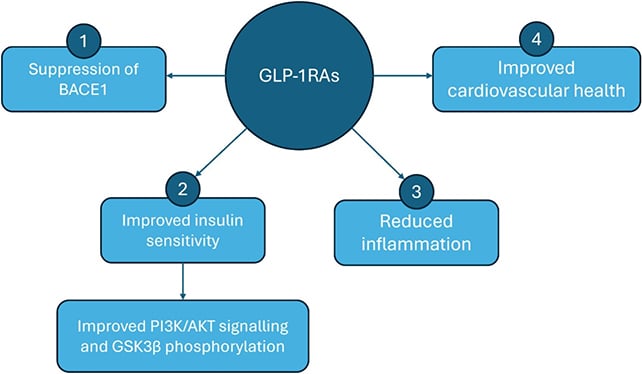
Further research is planned to understand how these drugs might reduce dementia risk by lowering inflammation and improving insulin signals in the brain. Larger clinical trials could confirm their effectiveness in Alzheimer’s prevention.