Warning: foreach() argument must be of type array|object, false given in /home/u750883576/domains/esl-news.com/public_html/wp-content/plugins/gpt-post-quiz/includes/admin/class-gpoq-admin-4.php on line 450
Warning: foreach() argument must be of type array|object, false given in /home/u750883576/domains/esl-news.com/public_html/wp-content/plugins/td-composer/legacy/common/wp_booster/td_menu.php on line 88
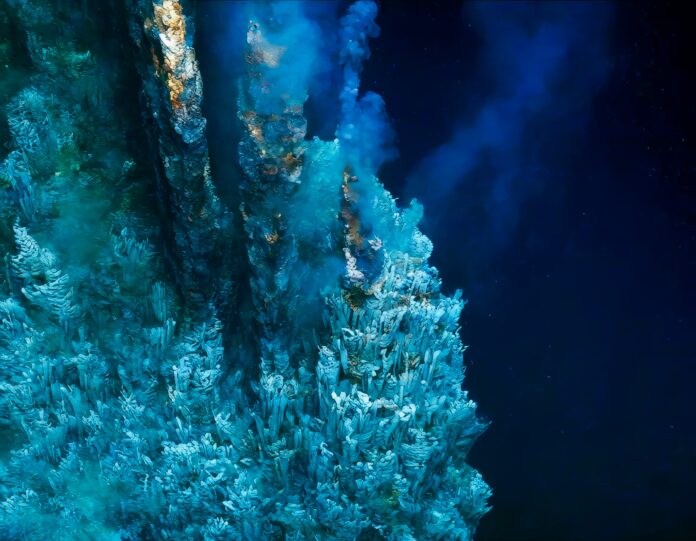
Deep beneath the Earth’s surface, life exists in ways we are just starting to discover. Most of this life is made up of tiny organisms, called microbes, and they may have just as much genetic diversity as life above ground.
Some strange ecosystems likely live with ancient water trapped deep inside rocks. These rocks, called Precambrian shield rocks, are some of the oldest on Earth. A study from 2014 found hydrogen-rich water in 19 mines in Canada, South Africa, and Finland. One mine near Timmins in Canada had liquid water that was isolated for up to 2.64 billion years.
This ancient water can support life because chemical reactions in the rocks produce hydrogen. Two main processes help create hydrogen: radiolytic decomposition, which splits water molecules due to natural radiation, and serpentinization, where certain minerals change and release hydrogen.
Since Precambrian rocks form over 70 percent of Earth’s crust, such places may be more common than we think. Geochemist Barbara Sherwood Lollar described them as a “sleeping giant,” suggesting a large area could support life.
The study of these environments could also offer clues about life on other planets, like Mars, where similar processes could be happening. Earth’s interior might even hold three times the amount of water found in our oceans, but it is trapped within minerals, not as liquid, ice, or vapour.
Test Your Understanding
Start Quiz
Vocabulary List:
6 words · tap to reveal
ON
Accent
Microbes/ˈmaɪkroʊbz/noun
Tiny living things that we cannot see.
Ecosystems/ˌiːkoʊˈsɪstəmz/noun
Communities of living things and their environment.