Warning: foreach() argument must be of type array|object, false given in /home/u750883576/domains/esl-news.com/public_html/wp-content/plugins/gpt-post-quiz/includes/admin/class-gpoq-admin-4.php on line 450
Warning: foreach() argument must be of type array|object, false given in /home/u750883576/domains/esl-news.com/public_html/wp-content/plugins/td-composer/legacy/common/wp_booster/td_menu.php on line 88
Every day, people touch many surfaces, like kitchen counters, public transport handrails, and phone screens. Germs and viruses can easily spread through these surfaces.
Infection often happens when someone touches a contaminated surface and then their face. Although chemical cleaners can disinfect surfaces, they may harm the environment or cause germs to resist medicines, a problem called antimicrobial resistance.
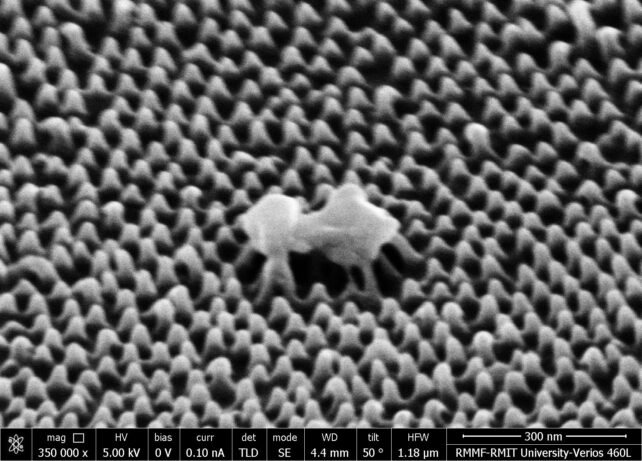
Recently, researchers developed a new type of thin plastic surface with tiny features called nanotextures, as small as a billionth of a meter. These mimic surfaces found on insect wings, which can break apart viruses, specifically targeting a virus known as hPIV-3.
This new material could help reduce the spread of diseases on surfaces like hospital equipment and phones. Current disinfection methods need the surface to stay wet to kill germs, which isn’t always practical, and can use harsh chemicals.
In nature, some insect wings naturally kill bacteria. Inspired by this, researchers created a material with tiny pillars that pierce and destroy viruses. In tests, up to 94% of hPIV-3 virus particles were damaged in an hour.
The technology could be used in many settings, including food packaging and public transport. Although these surfaces are durable, they face wear and tear over time. This approach may offer a new way to protect against viruses without relying on chemicals.