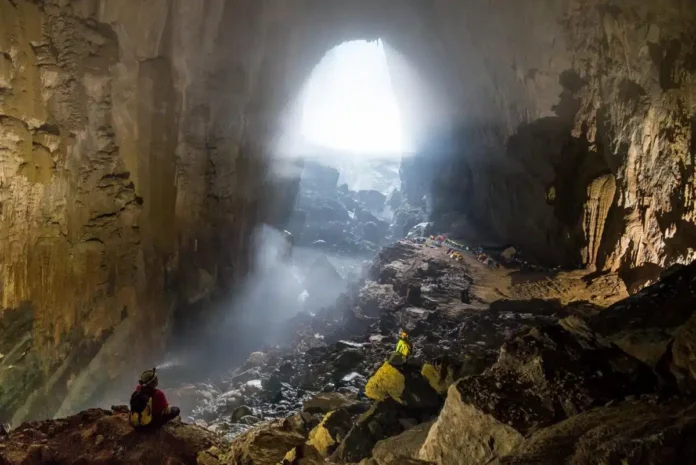
S?n ?oòng Cave, located in Vietnam’s Qu?ng Bình province, remained hidden for millions of years until its accidental discovery in the early 1990s. This remarkable cave is now known as the largest cave in the world, drawing attention to its immense size and unique features.
In December 1990, local explorer H? Khanh sought refuge from a storm when he stumbled upon the cave’s entrance. He described a cold breeze and thick fog emerging from the opening, resembling a “dragon’s breath.” Although intrigued, he did not enter, concerned about the dangers inside. This encounter remained vivid in his memory for years.
Khanh later met Howard Limbert, a member of the British-Vietnam Caving Expedition Team, who encouraged him to help locate the cave again. However, an initial search in 2007 failed due to the challenging jungle terrain. In 2008, Khanh returned alone and successfully marked the cave’s entrance, allowing others to revisit it.
The expedition team entered the cave in 2009, accompanied by Khanh and scientists from the Hanoi University of Science. They discovered that S?n ?oòng has a volume of approximately 38.4 million cubic meters, making it the largest known cave globally. The cave measures nearly 9 kilometres in length and sections can be as wide as 198 metres.
This extraordinary site contains fascinating formations, such as the towering “Hope and Vision” stalagmite, which reaches around 70 metres tall. Much of the surrounding park remains unexplored, leaving the potential for further discoveries.
Test Your Understanding
How much do you know?