Warning: foreach() argument must be of type array|object, false given in /home/u750883576/domains/esl-news.com/public_html/wp-content/plugins/gpt-post-quiz/includes/admin/class-gpoq-admin-4.php on line 450
Warning: foreach() argument must be of type array|object, false given in /home/u750883576/domains/esl-news.com/public_html/wp-content/plugins/td-composer/legacy/common/wp_booster/td_menu.php on line 88
Every day, people touch many surfaces like kitchen counters, bus handrails, work desks, and phone screens. Germs and viruses can spread easily through these contact points, often infecting people when they touch their face after contact with contaminated surfaces.
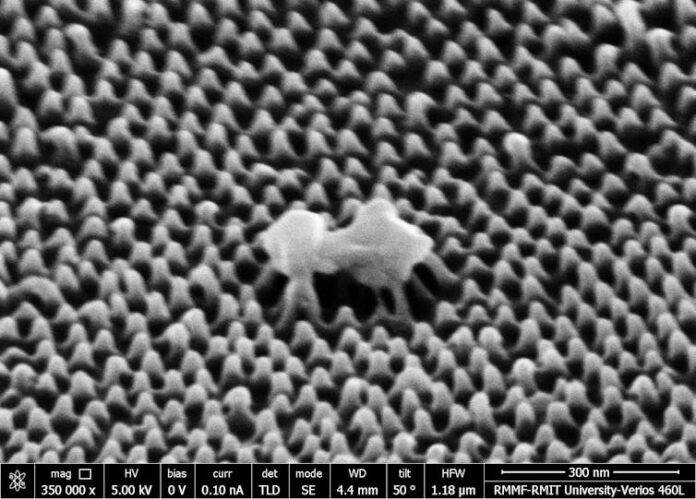
While surfaces can be cleaned with chemical products, these can harm the environment and may lead to germs becoming resistant to medicines. Researchers recently published a study in Advanced Science where they developed a thin plastic surface with nanoscale features, mimicking the surface of insect wings. This can physically destroy viruses, such as the human parainfluenza virus type 3 (hPIV-3), offering a more environmentally friendly way to stop disease spread.
Typical disinfection involves cleaning surfaces, which can be difficult because disinfectants need to remain wet for a while to work. Surfaces also quickly become contaminated again. Existing antiviral coatings, often using materials like graphene, can pose health risks and become less effective as their active ingredients weaken.
The journey to develop this new virus-bursting surface began over a decade ago. Initially, researchers aimed for smooth surfaces to repel germs, but discovered that rough, textured surfaces inspired by insect wings were more effective at killing bacteria and viruses through physical means.
In the latest study, scientists created a lightweight and flexible film with tiny pillars that tear apart virus particles. Tests showed that up to 94% of hPIV-3 particles were destroyed within an hour. This material could be scaled for various uses, from food packaging to public transport and medical equipment. Despite their durability, these surfaces will eventually degrade, but they offer a promising alternative to chemical methods in fighting germs.