Every day, people touch many surfaces, like kitchen counters, handrails, desks, and phone screens. These surfaces can spread viruses and germs.
Typically, infection spreads when someone touches a contaminated surface and then touches their eyes, nose, or mouth. While chemical cleaners can disinfect, they may harm the environment and contribute to antimicrobial resistance, where germs stop responding to treatments.
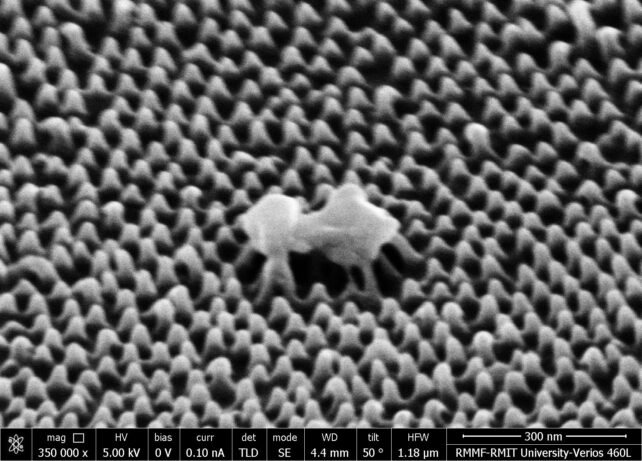
A new study in “Advanced Science” introduces a plastic surface with nanoscale features, tiny structures a billionth of a metre in size. These mimic insect wings, which naturally kill bacteria by rupturing them. This surface can physically break apart viruses, like human parainfluenza virus type 3 (hPIV-3).
This innovation offers an affordable solution for making surfaces like phone screens and hospital equipment less likely to spread disease. Traditional methods involve cleaning, which requires chemicals and can quickly recontaminate surfaces.
Scientists previously explored antiviral surface coatings using materials like graphene. While effective, they can pose health risks and harm the environment as their potency decreases.
The initial aim was to design a smooth surface to repel germs, but research found bacteria adhered more to smooth surfaces. Inspired by insect wings, a surface covered in tiny pillars was developed to kill bacteria by stretching their membranes.
The researchers created a flexible, lightweight, and cost-effective material covered with nanopillars, which physically tear viruses apart. Lab tests showed up to 94% of hPIV-3 particles were destroyed within an hour.
This material, adaptable for various industries, could replace traditional methods. However, like all materials, it may degrade over time. Further research aims to improve germ-free surfaces and combat viruses without relying on chemicals.
Test Your Understanding
How much do you know?