Saturday, March 28, 2026

NASA Unveils Nuclear-Powered Mars Mission with Skyfall Helicopters

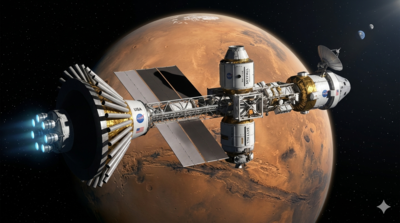
NASA plans to launch a nuclear-powered mission to Mars by 2028. This mission is important because it could change how humans explore space. Until now, Mars missions mostly used chemical and solar power, which have limits in speed and efficiency. Nuclear power can help spacecraft travel faster and carry more equipment.

The upcoming mission will use a spacecraft with Nuclear Electric Propulsion (NEP). This system uses a small nuclear reactor to create electricity. The electricity will power the spacecraft, allowing it to travel long distances without much fuel. The spacecraft may also launch helicopters, which can explore areas on Mars that robots cannot reach. NASA hopes this mission will help future trips to Mars.

Nuclear propulsion is different from traditional rockets. It provides a steady and efficient source of power. This technology can be two to five times more efficient than chemical systems. It does not depend on sunlight and is better for deep space missions.

Reducing the travel time to Mars is a major goal. Currently, it takes six to nine months to get there. A faster journey can lower health and financial risks for astronauts. NASA is already testing the nuclear engine to prove its effectiveness before the mission. If successful, this mission could mark the start of a new era in space exploration.


Test Your Understanding

Start Quiz

Vocabulary List:
6 words · tap to reveal
ON

AccentSpeed

propulsion/prəˈpʌlʃən/noun
force that moves a vehicle forward

reactor/riˈæktɚ/noun
machine that makes heat or power

efficiency/ɪˈfɪʃənsi/noun
how well something uses energy or time

spacecraft/ˈspeɪskræft/noun
vehicle made to travel in space

electricity/ɪˌlɛkˈtrɪsəti/noun
power used to run machines and lights

nuclear/ˈnuːkliɚ/adjective
relating to energy produced by atoms

How much do you know?

What type of mission does NASA plan to launch by 2028?
Chemical-powered mission
Solar-powered mission
Nuclear-powered mission
Hybrid-powered mission
What propulsion system will the upcoming mission use?
Electric Propulsion
Chemical Propulsion
Nuclear Electric Propulsion
Solar Electric Propulsion
How much more efficient can nuclear propulsion be compared to chemical systems?
One to three times
Two to five times
Three to six times
Four to seven times
What is one of the major goals for the Mars mission?
To increase chemical efficiency
To launch satellites
To reduce the travel time
To set up a permanent base
What unique feature does the spacecraft plan to use?
Helicopters
Drones
Robots
Gliders
How long does it currently take to travel to Mars?
Three to six months
Six to nine months
Nine to twelve months
Twelve to fifteen months
NASA's mission to Mars will primarily use solar power.
Nuclear propulsion does not depend on sunlight.
The upcoming mission plans to use robots exclusively for exploration on Mars.
The new nuclear propulsion system could travel faster and carry more equipment.
NASA has already tested the nuclear engine to prove its effectiveness.
Chemical and solar power have no limits in speed and efficiency.
NASA plans to launch a nuclear-powered mission to Mars by .
The spacecraft will use Electric Propulsion (NEP) for the mission.
Reducing the travel time to Mars is a major .
Currently, it takes six to nine months to get to .
The technology used is expected to be two to five times more than chemical systems.
NASA hopes this mission will help future trips to .
This question is required

Test Your Understanding

Start Quiz
Vocabulary List:
6 words · tap to reveal
ON
AccentSpeed
propulsion/prəˈpʌlʃən/noun
force that moves a vehicle forward
reactor/riˈæktɚ/noun
machine that makes heat or power
efficiency/ɪˈfɪʃənsi/noun
how well something uses energy or time
spacecraft/ˈspeɪskræft/noun
vehicle made to travel in space
electricity/ɪˌlɛkˈtrɪsəti/noun
power used to run machines and lights
nuclear/ˈnuːkliɚ/adjective
relating to energy produced by atoms

How much do you know?

What type of mission does NASA plan to launch by 2028?
Chemical-powered mission
Solar-powered mission
Nuclear-powered mission
Hybrid-powered mission
What propulsion system will the upcoming mission use?
Electric Propulsion
Chemical Propulsion
Nuclear Electric Propulsion
Solar Electric Propulsion
How much more efficient can nuclear propulsion be compared to chemical systems?
One to three times
Two to five times
Three to six times
Four to seven times
What is one of the major goals for the Mars mission?
To increase chemical efficiency
To launch satellites
To reduce the travel time
To set up a permanent base
What unique feature does the spacecraft plan to use?
Helicopters
Drones
Robots
Gliders
How long does it currently take to travel to Mars?
Three to six months
Six to nine months
Nine to twelve months
Twelve to fifteen months
NASA's mission to Mars will primarily use solar power.
Nuclear propulsion does not depend on sunlight.
The upcoming mission plans to use robots exclusively for exploration on Mars.
The new nuclear propulsion system could travel faster and carry more equipment.
NASA has already tested the nuclear engine to prove its effectiveness.
Chemical and solar power have no limits in speed and efficiency.
NASA plans to launch a nuclear-powered mission to Mars by .
The spacecraft will use Electric Propulsion (NEP) for the mission.
Reducing the travel time to Mars is a major .
Currently, it takes six to nine months to get to .
The technology used is expected to be two to five times more than chemical systems.
NASA hopes this mission will help future trips to .
This question is required

Read More