Thursday, May 21, 2026

NASA’s Psyche Spacecraft Unveils New Perspectives of Earth

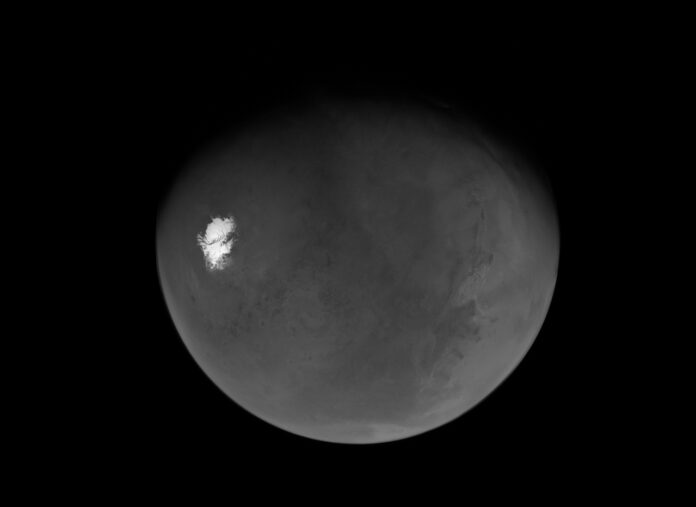
NASA’s Psyche spacecraft recently passed by Mars, capturing images of the planet from a unique viewpoint. This approach, from the side opposite the Sun, made Mars appear as a thin crescent. The thin Martian atmosphere was visible as sunlight illuminated dust clouds above the planet’s rust-coloured surface.

During its flyby on May 15, 2026, Psyche’s cameras provided an overhead view of Mars’ southern polar ice cap. Jim Bell, who leads the imager team at Arizona State University, reported that the spacecraft took thousands of images. These observations will assist scientists in calibrating the camera’s performance.

Additionally, Psyche’s magnetometer might have detected signs of the solar wind interacting with Mars’ upper atmosphere or its weak magnetic field. The spacecraft’s spectrometers are also set to analyse the chemical makeup of the Martian surface beneath its flight path.

Currently, many other missions are studying Mars, so significant new discoveries from Psyche’s data are unlikely. However, these flyby observations will help scientists refine their instruments by comparing them with existing data from other Mars missions.

While seeing a crescent Mars from Earth is impossible, the Psyche mission is expected to yield more significant results in the future. In three years, the spacecraft will approach asteroid Psyche, a large, metal-rich object. This phase will allow Psyche to survey the asteroid for a much longer time than the brief encounter it had with Mars.


Test Your Understanding

Start Quiz

Vocabulary List:
6 words · tap to reveal
ON

Accent

atmosphere/ˈætməsfɪr/noun
the layer of gases around a planet

flyby/ˈflaɪˌbaɪ/noun
a close pass of a spacecraft near a body

calibrating/ˈkælɪˌbreɪtɪŋ/verb
adjusting a tool to make results accurate

magnetometer/ˌmæɡnəˈtɑmɪtər/noun
a tool that measures magnetic fields

spectrometers/spɛkˈtrɑmɪtərz/noun
tools that show what chemicals are present

interacting/ˌɪntərˈæktɪŋ/verb
acting together and affecting each other

How much do you know?

What unique viewpoint did NASA's Psyche spacecraft capture images of Mars from?
The side opposite the Sun
The north pole
The equator
The surface
On what date did Psyche perform its flyby of Mars?
May 15, 2026
April 20, 2026
June 10, 2026
January 1, 2026
What feature of Mars did Psyche's cameras provide an overhead view of?
Northern polar ice cap
Southern polar ice cap
Valles Marineris
Olympus Mons
Who leads the imager team at Arizona State University?
Elon Musk
Jim Bell
Bill Nye
Carl Sagan
What did Psyche's spectrometers analyze?
Martian atmosphere
Chemical makeup of the Martian surface
Magnetic field of Mars
Dust clouds above Mars
What is the expected time frame for Psyche to approach asteroid Psyche?
In one year
In two years
In three years
In four years
NASA's Psyche spacecraft captured images of Mars during its flyby.
Psyche's cameras took millions of images during its flyby of Mars.
It is possible to see a crescent Mars from Earth.
Psyche's magnetometer detected signs of the solar wind interacting with Mars' upper atmosphere.
The Psyche mission's initial encounter with Mars is expected to provide significant new discoveries.
Psyche will survey asteroid Psyche for a longer time than its brief encounter with Mars.
Psyche's cameras took thousands of images during its flyby on May 15, 2026, allowing scientists to .
NASA's Psyche spacecraft recently passed by Mars, capturing images of the planet from a unique .
The thin Martian was visible as sunlight illuminated dust clouds above the planet's surface.
Currently, many other missions are studying Mars, so significant new discoveries from Psyche's data are .
Psyche's magnetometer might have detected signs of the solar wind interacting with Mars' weak .
In three years, the spacecraft will approach asteroid Psyche, a large, metal-rich .
This question is required

Test Your Understanding

Start Quiz
Vocabulary List:
6 words · tap to reveal
ON
Accent
atmosphere/ˈætməsfɪr/noun
the layer of gases around a planet
flyby/ˈflaɪˌbaɪ/noun
a close pass of a spacecraft near a body
calibrating/ˈkælɪˌbreɪtɪŋ/verb
adjusting a tool to make results accurate
magnetometer/ˌmæɡnəˈtɑmɪtər/noun
a tool that measures magnetic fields
spectrometers/spɛkˈtrɑmɪtərz/noun
tools that show what chemicals are present
interacting/ˌɪntərˈæktɪŋ/verb
acting together and affecting each other

How much do you know?

What unique viewpoint did NASA's Psyche spacecraft capture images of Mars from?
The side opposite the Sun
The north pole
The equator
The surface
On what date did Psyche perform its flyby of Mars?
May 15, 2026
April 20, 2026
June 10, 2026
January 1, 2026
What feature of Mars did Psyche's cameras provide an overhead view of?
Northern polar ice cap
Southern polar ice cap
Valles Marineris
Olympus Mons
Who leads the imager team at Arizona State University?
Elon Musk
Jim Bell
Bill Nye
Carl Sagan
What did Psyche's spectrometers analyze?
Martian atmosphere
Chemical makeup of the Martian surface
Magnetic field of Mars
Dust clouds above Mars
What is the expected time frame for Psyche to approach asteroid Psyche?
In one year
In two years
In three years
In four years
NASA's Psyche spacecraft captured images of Mars during its flyby.
Psyche's cameras took millions of images during its flyby of Mars.
It is possible to see a crescent Mars from Earth.
Psyche's magnetometer detected signs of the solar wind interacting with Mars' upper atmosphere.
The Psyche mission's initial encounter with Mars is expected to provide significant new discoveries.
Psyche will survey asteroid Psyche for a longer time than its brief encounter with Mars.
Psyche's cameras took thousands of images during its flyby on May 15, 2026, allowing scientists to .
NASA's Psyche spacecraft recently passed by Mars, capturing images of the planet from a unique .
The thin Martian was visible as sunlight illuminated dust clouds above the planet's surface.
Currently, many other missions are studying Mars, so significant new discoveries from Psyche's data are .
Psyche's magnetometer might have detected signs of the solar wind interacting with Mars' weak .
In three years, the spacecraft will approach asteroid Psyche, a large, metal-rich .
This question is required

Read More